
A successful workshop or strategy session starts with a room that supports the way your team works. This is why learning how to choose meeting rooms becomes more important, especially when there are numerous meeting room providers in Central London.
This guide covers the key factors to consider when hiring a meeting room in Central London, with practical advice on choosing the right space for your agenda, managing your budget, and creating a productive session from start to finish.
What makes a meeting room suitable for workshops and strategy sessions?

Workshops and strategy sessions require different meeting environments. Workshops prioritise participation, creative exercises, and group interaction, while strategy sessions focus on business planning, performance reviews, and decision-making.
Understanding these differences helps organisers choose a room that supports the session’s objectives rather than relying on capacity alone.
| Key consideration | Workshops | Strategy sessions |
| Primary purpose | Creative collaboration, problem-solving, and active participation | Strategic planning, reviewing priorities, and making decisions |
| Common meeting types | Brainstorming, training, design thinking, and team-building workshops | Leadership meetings, quarterly reviews, business planning, and executive discussions |
| Comfort for longer sessions | Comfortable seating, natural light, refreshments, and space to move between activities | Ergonomic seating, suitable lighting, temperature control, and minimal distractions |
| Privacy requirements | Moderate, depends on the sensitivity of discussions | Often higher, particularly for confidential business plans and performance reviews |
| Flexible arrangements and additional activities | Adaptable seating, breakout groups, whiteboards, and hands-on exercises | Boardroom or U-shaped seating, presentation equipment, and occasional breakout discussions |
From this brief comparison, workshops generally require more room for movement and collaborative exercises, while strategy sessions benefit from a setting that supports sustained discussion and concentration.
For example, a creative workshop involving 20 participants may need several smaller tables for group activities, whereas a leadership strategy meeting with eight executives may work better in a private boardroom with a shared presentation screen.
Seven factors to consider when choosing a workshop meeting room in Central London
Beyond the basic requirements, the right meeting room should create a comfortable, productive environment that encourages participation and keeps the session running smoothly. Here are seven practical considerations to help you choose a space that supports your activities, schedule, and budget.
1. Match the room to your workshop or strategy objectives

Before booking, define the session’s objectives and expected outcomes. The Department for Work and Pensions recommends setting clear, achievable objectives that lead to tangible results, such as decisions or action plans.
The room’s layout, facilities and level of privacy should reflect the type of session you plan to run. The table below outlines the key requirements for common workshop and strategy formats to help you identify a suitable space for your objectives.
| Session type | Room requirements |
| Brainstorming workshop | Flexible seating, whiteboards, and space for group exercises and idea sharing. |
| Leadership strategy session | Private, quiet surroundings with boardroom-style seating for focused discussions and decision-making. |
| Team collaboration workshop | Movable furniture and sufficient space for breakout groups and interactive activities. |
| Business planning session | Presentation facilities, reliable Wi-Fi, and comfortable seating for reviewing plans and setting priorities. |
Choosing the right meeting room can help organisers evaluate these practical considerations, compare available options and select a space that aligns with the session’s purpose.
2. Consider the duration and flow of your session

The session’s duration determines how much time you need for presentations, group activities, breaks, and final discussions. A structured agenda with clear timings helps participants stay focused while allowing flexibility for discussions.
For example, a three-hour collaborative workshop for 25 participants in Central London, running from 2:00 pm to 5:00 pm, could follow this schedule:
| Time | Activity | Purpose |
| 2:00-2:15 pm | Welcome and workshop objectives | Introduce participants, explain goals, and outline the agenda |
| 2:15-2:40 pm | Presentation and context setting | Share background information and key challenges |
| 2:40-3:20 pm | Small-group brainstorming | Divide 25 participants into five groups of five to generate ideas |
| 3:20-3:30 pm | Refreshment break | Allow participants to recharge and have conversations with each other |
| 3:30-4:10 pm | Group presentations and discussion | Share findings, compare ideas, and gather feedback |
| 4:10-4:40 pm | Prioritisation and action planning | Agree on priorities, responsibilities, and next steps |
| 4:40-5:00 pm | Final review and wrap-up | Summarise decisions, confirm actions, and close the session |
This workshop would benefit from a room accommodating 25 participants in five small groups, with movable seating, a presentation screen, whiteboards or flipcharts, and sufficient space for group discussions.
Organisers should also allow additional time before and after the session for setting up equipment, arranging materials, and clearing the room.
3. Budget for your workshop or strategy session
Meeting room hire in Central London varies depending on room capacity, facilities, location, and booking duration. As a general planning estimate, standard rooms may cost around £35-£100 per hour, while larger or premium spaces can cost more. Comparing options for meeting room hire in Central London can help organisers understand typical booking arrangements, assess what is included in the price, and identify potential additional costs before confirming a venue.
When comparing options, consider:
- Booking duration: Hourly, half-day, or full-day hire, depending on the agenda.
- Included facilities: Presentation equipment, Wi-Fi, and complimentary refreshments.
- Additional costs: Catering, specialist equipment, and overtime charges.
- Booking terms: Minimum hire periods, setup time, and cancellation policies.
Choose a booking arrangement that accommodates the complete workshop agenda without unnecessary costs. For longer sessions, a half-day or full-day package may offer better value than extending an hourly booking.
4. Choose a layout that encourages participation
Knowing how to set up a meeting room helps organisers match the seating arrangement to their workshop format, from collaborative brainstorming to structured strategic discussions. The table below outlines suitable layouts for different session types and explains why each works.
| Session type | Recommended room layout | Why it works |
| Brainstorming workshop | Cabaret | Seats participants in small groups to exchange ideas and complete collaborative exercises. |
| Leadership strategy session | Boardroom | Brings participants around one shared table for focused discussions and strategic decision-making. |
| Team collaboration workshop/Facilitator-led workshop | U-shaped | Keeps participants facing one another, encouraging direct communication, shared problem-solving and active participation in facilitator-led discussions. |
| Business planning session | Classroom or boardroom | Provides a practical setup for reviewing presentations, taking notes and discussing priorities. |
Confirm the available layouts with the venue before booking, as not every room supports all configurations. Consider how participants will move between presentations, discussions, and group activities.
5. Plan for essential presentation and collaborative tools

Workshops often involve presentations, brainstorming boards, shared documents, and group feedback. Check that your chosen room provides presentation screens, whiteboards, reliable Wi-Fi, and suitable video-conferencing equipment before guests arrive. For hybrid sessions, clear audio and camera coverage help remote participants contribute without interrupting the discussion.
Our meeting rooms in Central London offer facilities for presentations, video conferencing, and collaborative discussions, helping teams work effectively throughout their sessions.
6. Allow space for breakout activities and focused discussions

Collaborative workshops may involve smaller teams working separately before presenting their ideas, while strategy sessions often require privacy for confidential discussions. According to research around small-group workshops, it is recommended that choosing rooms with sufficient floor space, tables, chairs, and equipment for planned activities.
Breakout areas, quiet surroundings, and comfortable seating are therefore important considerations when choosing a training room in London for interactive group activities. For strategy sessions involving sensitive information, prioritise a private room with minimal interruptions and suitable facilities for focused conversations.
7. Balance comfort with meeting room capacity
A meeting room advertised for 25 people may accommodate that number in a standard seating arrangement, but it might feel crowded during an interactive workshop. Overcrowding can restrict movement, limit group activities, and make longer sessions uncomfortable. Participants need sufficient space to move between tables, collaborate, and access shared equipment.
Consider leaving approximately 10-20% of the advertised room capacity unused when planning interactive workshops. For example, a room accommodating 25 people may provide a more comfortable experience for around 20-22 participants. Actual requirements depend on the room’s layout and activities, so confirm the usable space with the venue before booking.

Actionable tips to run a productive workshop or strategy session
A productive workshop or strategy session depends on clear communication, active participation, and effective follow-up. Good facilitation helps teams stay focused, exchange ideas, and turn discussions into practical outcomes.
Once the venue and agenda are confirmed, organisers should focus on how participants will contribute and how the results will be carried forward.
- Communicate the expected outcomes: Clarify the decisions, ideas, or solutions the session should produce so participants understand its purpose and what they are working towards.
- Invite the right participants: Include people with relevant expertise, responsibilities, and decision-making authority to support meaningful discussions and avoid unnecessary delays.
- Share background information in advance: Provide reports, discussion questions, or project updates beforehand to avoid spending valuable meeting time reviewing basic information.
- Keep discussions focused and inclusive: Encourage contributions from all participants, manage off-topic conversations, and allow quieter attendees to share their perspectives.
- Document key ideas and decisions: Record important insights, agreed priorities, and unresolved questions throughout the session to ensure nothing is overlooked. A designated note-taker can help facilitators concentrate on guiding the conversation.
- Assign clear actions and follow up: Identify task owners, set realistic deadlines, and share a concise meeting summary so participants understand their next steps.
Effective facilitation should balance structured discussions with opportunities for participants to explore different perspectives. Following up on agreed actions also helps ensure that the ideas and decisions made during the session lead to measurable progress.
Which Gilmoora House meeting room suits your workshop or strategy session?
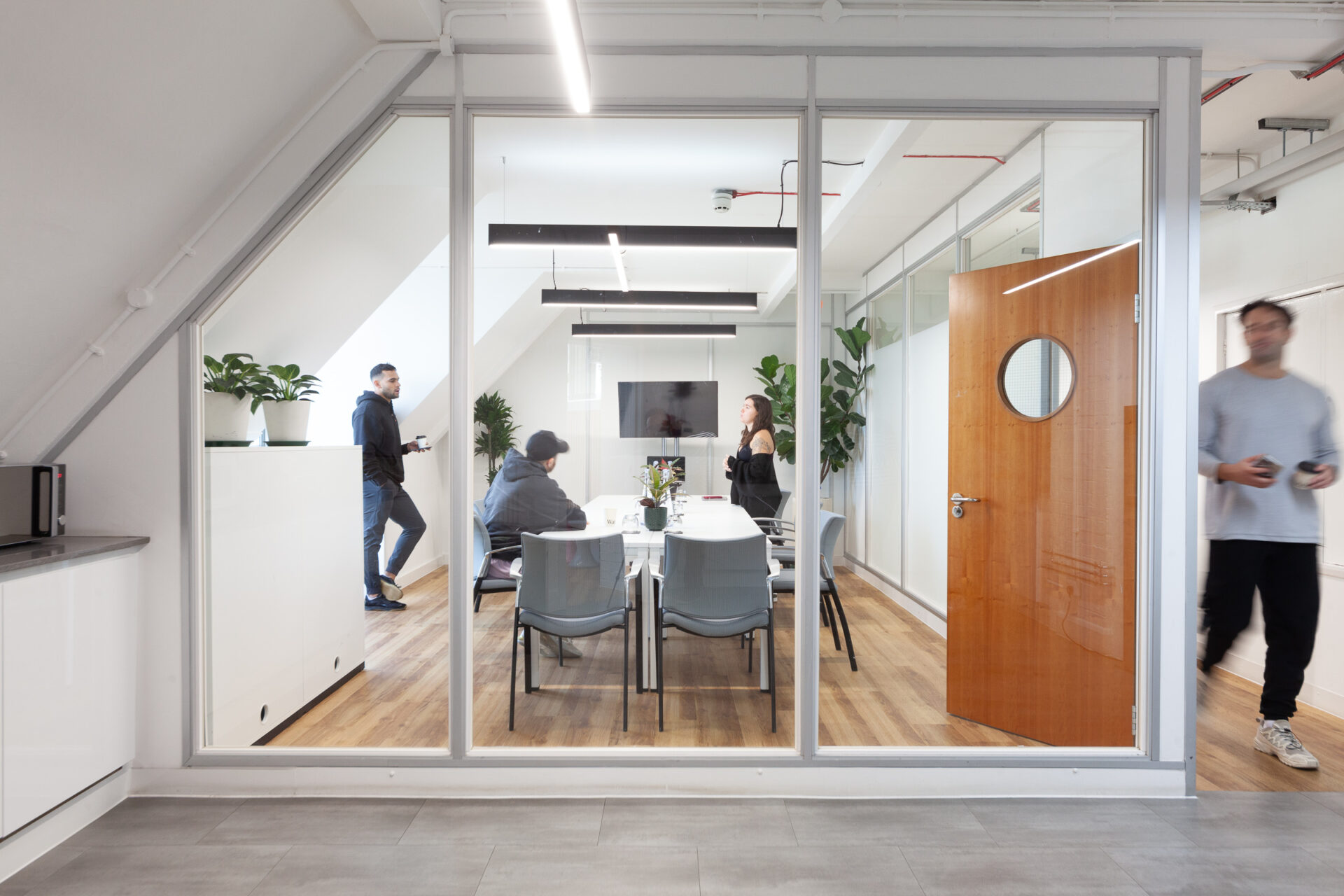
Located at 57-61 Mortimer Street in the heart of Fitzrovia, Gilmoora House provides a prime Central London location for business workshops, team planning days, and strategic meetings. Just a six-minute walk from Oxford Circus, with Goodge Street and Tottenham Court Road stations nearby, our location offers convenient transport connections for participants travelling across London.
Our meeting room options accommodate groups of 4 to 28 people, with open spaces for collaborative workshops, leadership planning, and smaller team discussions. The table below compares the rooms by capacity, session objectives, and distinctive features.
| Meeting rooms | Capacity | Best for | Key features and considerations |
| Portland | up to 28 people | Company workshops, collaborative brainstorming, departmental strategy sessions, and team planning days | Mortimer and Langham can be combined to create a larger meeting space for up to 28 people, with at least two days’ notice and a minimum four-hour booking required |
| Mortimer | up to 14 people | Large, spacious boardroom with plenty of natural light | |
| Langham | Airy, spacious, and comfortable boardroom | ||
| Margaret Suite | Up to 8 people | Leadership strategy sessions, executive planning, quarterly reviews, and confidential discussions | Private fifth-floor suite with views across Fitzrovia and a separate, fully equipped breakout area |
| Titchfield | up to 5 people | Small-team brainstorming, project planning, management catch-ups, and focused strategy discussions | Cosy meeting room with a round table |
| Wells | up to 4 people | Contemporary, spacious huddle room with a modern interior |
All meeting room options include presentation screens, Logitech video-conferencing equipment, high-speed internet, air conditioning, and complimentary refreshments. Whiteboards and flipcharts are also available, while our team can arrange catering for longer sessions. We also welcome well-behaved dogs, with complimentary water bowls and a waste disposal bin to ensure public hygiene. Simply inform our team in advance when booking.
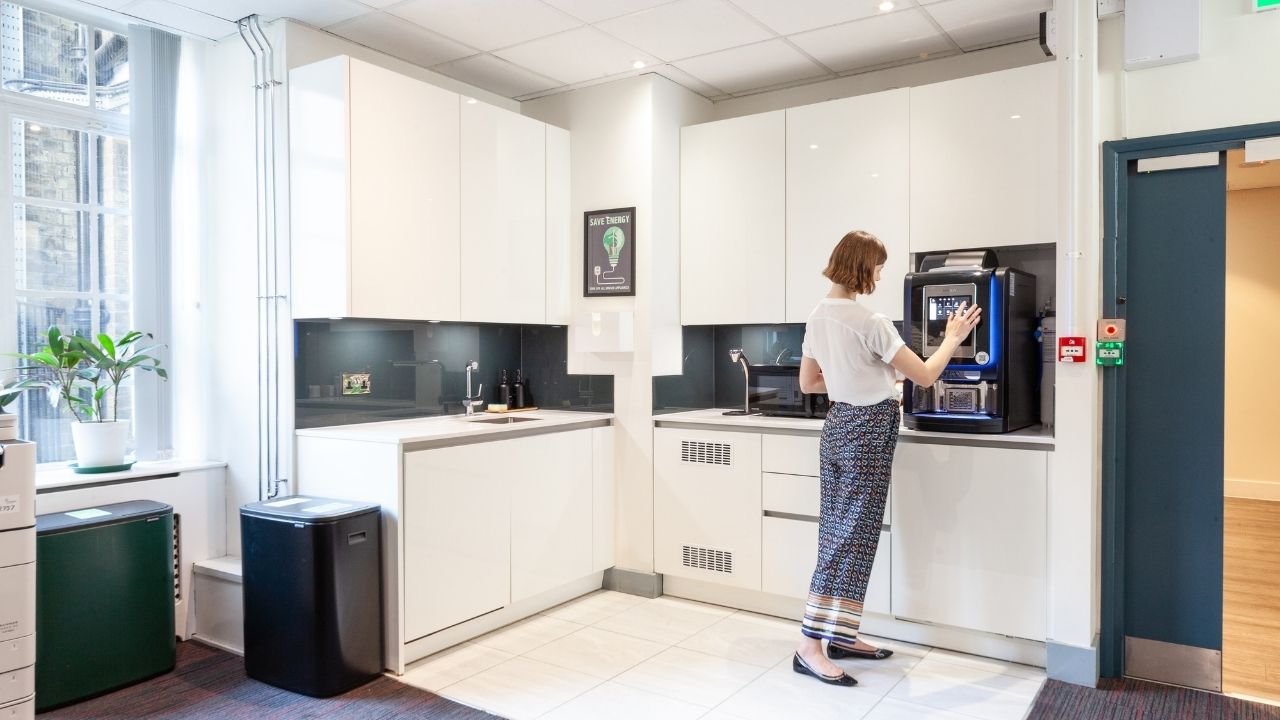
For full-day workshops, organisers can take refreshment breaks at coffee shops in Fitzrovia, many just a 2–5 minutes walk from Gilmoora House on Mortimer Street. Charlotte Street, around a 5-6 minutes walk away, offers a variety of cafés and restaurants for team lunches or informal discussions. Additional local restaurants and coffee and lunch spots near Gilmoora House provide convenient options for breaks between activities.
Host your next workshop or strategy session at Gilmoora House
Once your workshop objectives and agenda are established, the next step is securing a venue that can accommodate your arrangements. At Gilmoora House, our Service Team can help coordinate the practical details, allowing organisers to focus on delivering a productive session.
We offer a straightforward booking experience, with several options to suit different schedules and requirements:
- Flexible booking durations: Hire a meeting room by the hour, half-day, or full-day, depending on your workshop agenda and the room’s booking conditions.
- Room preparation: Our Service Team can assist with room arrangements and setup requirements ahead of your session.
- Additional services: Discuss catering requirements or other arrangements with our team when booking.
- Convenient booking process: Check availability, book, and pay for meeting rooms and additional services through the Gilmoora House app, or contact our team directly for assistance.
- Open to all businesses: Our meeting rooms are available to both existing clients and external organisations, with no requirement to rent an office at Gilmoora House.
Book a tour of our meeting rooms for workshops or discuss your requirements with our Service Team at enquiries@gilmoorahouse.com or 020 3008 6650.

FAQs about meeting rooms for workshops and strategy sessions
1. What should I consider when choosing a meeting room for a strategy session?
Consider the number of participants, seating layout, privacy requirements and facilities needed for presentations or collaborative discussions. The room should accommodate your agenda comfortably and provide a suitable environment for participants to exchange ideas, review priorities and make decisions.
1. Can I book a meeting room at Gilmoora House without renting an office?
Yes. Gilmoora House welcomes both existing clients and external businesses. You can book a meeting room for a one-off workshop, team planning session, or regular strategy meeting without renting an office at the property.
2. What facilities are included in Gilmoora House meeting rooms?
Our meeting rooms include presentation screens, Logitech video-conferencing equipment, high-speed internet, air conditioning, and complimentary refreshments. Whiteboards and flipcharts are also available, and catering can be arranged upon request.
3. Can I book a meeting room at Gilmoora House for a large workshop?
Yes. Portland accommodates up to 28 participants by combining the Mortimer and Langham rooms, making it suitable for larger workshops, collaborative brainstorming, and departmental planning sessions. This arrangement requires at least two days’ advance notice and a minimum four-hour booking. Contact our Service Team to discuss your workshop requirements and preferred layout.