
Solicitors in London have different workspace needs depending on the size of their practice, how they work with clients, and the level of administrative support they require. The choice between a physical office and a virtual office therefore depends on which arrangement best supports their day-to-day operations, client relationships, and long-term business needs.
This guide compares both options in terms of costs, professional presence, and regulatory requirements to help solicitors identify the most suitable arrangement for their practice.
What is the difference between a physical office and a virtual office for solicitors?
A physical office and a virtual office offer different advantages depending on how a solicitor manages their practice. While physical premises provide a dedicated space for daily operations and face-to-face client meetings, a virtual office allows solicitors to work across different locations while accessing selected business services. Understanding these differences can help determine which arrangement best suits a firm’s working practices, budget, and client requirements.

A virtual office in Central London can provide a business address without the ongoing commitment of renting permanent premises. The comparison below outlines the key differences between the two options, including costs, workspace, client communication, and practical considerations for legal practices.
| Feature | Physical office | Virtual office |
| Business address | Dedicated premises | Professional commercial address |
| Office costs | Rent, utilities, maintenance | Monthly service package |
| Daily workspace | Dedicated office | Optional co-working space access |
| Client meetings | On-site facilities | Bookable meeting rooms |
| Mail handling | Managed internally | Managed by providers |
| Telephone answering | In-house or outsourced | Available with selected packages |
| Flexibility | Depends on lease | Supports remote and hybrid working |
| Client confidentiality | Dedicated controlled environment | Requires careful meeting room/privacy checks |
| Regulatory considerations | Usually straightforward | Must distinguish business address vs practising address |
| Court attendance | May leave office unused | Better suited for mobile practices |
| Document handling | Internal management | Provider procedures need review |
| Client perception | Traditional presence | Professional address without full lease |
For solicitors who do not require permanent premises, a virtual office may provide a more flexible business-address solution, subject to the firm’s regulatory requirements and the services it needs to deliver.
Physical office vs virtual office for solicitors: Six key factors to compare
Both arrangements can support a professional legal practice, but their suitability depends on how frequently solicitors need physical workspace, how they communicate with clients, and how they manage confidential information. The following factors can help small and hybrid legal practices assess the practical advantages of each option.
1. Office costs and financial commitments
A physical office involves ongoing expenses beyond rent, including utilities, cleaning, furniture, IT equipment, maintenance, and reception services. Longer leases can also limit flexibility when staffing levels or workspace requirements change.
A virtual office offers a more flexible cost structure through monthly service packages, allowing solicitors to pay for essential administrative support and book meeting rooms when needed. This arrangement can help sole practitioners and small law firms keep fixed costs low by paying for essential services, such as mail handling and telephone answering, without maintaining permanent premises. Meeting rooms can also be booked when face-to-face consultations are needed.
2. Professional image and London business presence
The right office arrangement depends on how a solicitor runs their practice. Solicitors who work remotely, attend court regularly, or serve clients across multiple locations may find a virtual office more practical than maintaining permanent premises. It provides a Central London business address with access to selected administrative services, without the ongoing costs of a dedicated office.
For solicitors who regularly meet clients in person, Fitzrovia offers a convenient setting, with a wide choice of cafés and restaurants for informal discussions or business lunches. Its strong public transport links make the area accessible for client appointments, allowing solicitors to maintain a presence in Central London while working flexibly.
3. Client meetings and confidential consultations
Physical offices suit practices that regularly conduct face-to-face consultations, review sensitive documents, or require dedicated meeting rooms throughout the week. Permanent premises provide a consistent environment for client appointments and confidential discussions.
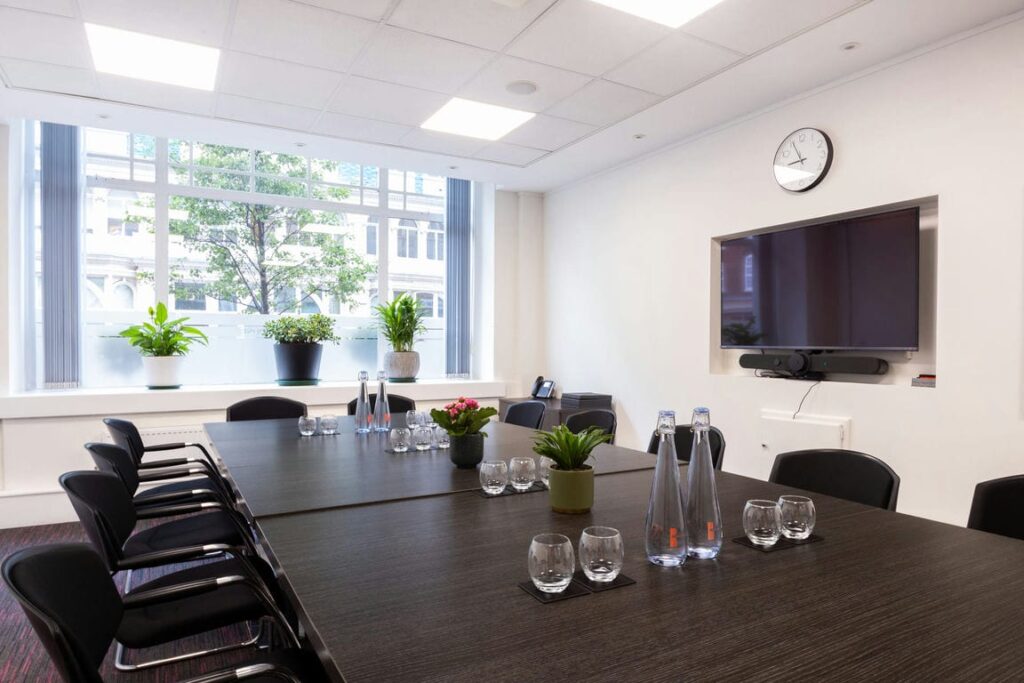
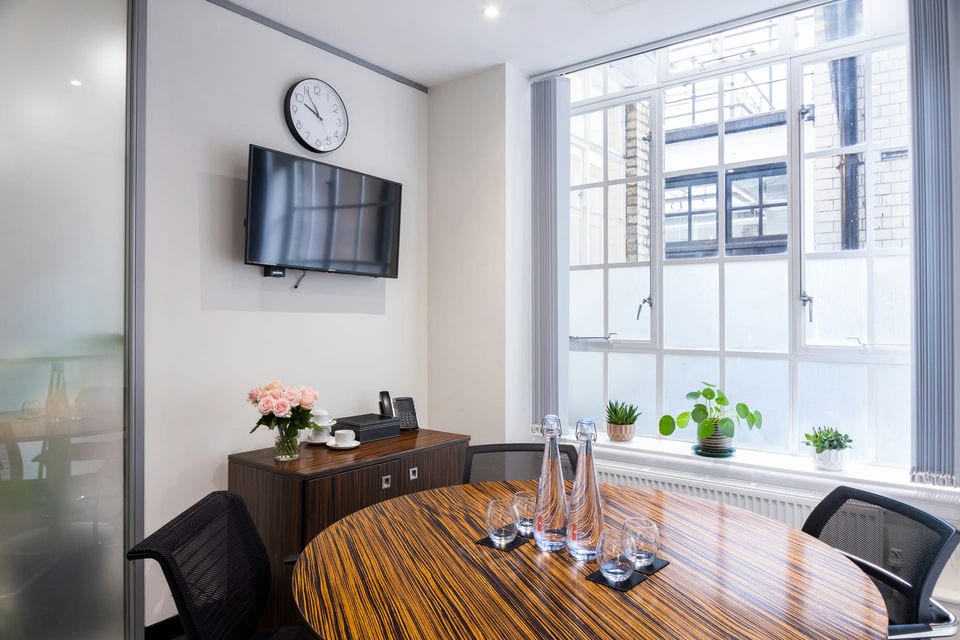
A virtual office can work well for solicitors who mainly meet clients online or only need face-to-face consultations occasionally. Many virtual office providers offer meeting rooms for hourly booking, giving solicitors access to a professional setting when in-person discussions are needed without the expense of maintaining permanent premises. For example, Gilmoora House’s meeting rooms in Central London provide a convenient space for client consultations and business discussions, with privacy and confidentiality remaining important considerations when discussing sensitive legal matters.

4. Mail handling and client communication
A physical office allows legal practices to manage correspondence internally, including receiving, sorting, and distributing client documents and regulatory notifications. However, the firm remains responsible for ensuring that mail is handled securely and urgent correspondence receives timely attention.
On the other hand, virtual office services can provide mail handling, forwarding, and, where available, scanning, alongside telephone answering through selected packages. When evaluating a provider, check its procedures for document access, urgent correspondence, and confidential information. Solicitors can also consider virtual business address services with mail forwarding for managing incoming correspondence, alongside reception services in London for additional telephone and administrative support, depending on the provider’s package.
5. Flexibility for remote and hybrid legal practices
A physical office provides consistent workspace, but it may be underused when solicitors frequently attend court, visit clients, or work remotely. Maintaining permanent premises can therefore create unnecessary costs for practices that do not require daily on-site facilities.
A virtual office allows firms to maintain a professional London business presence while accessing meeting rooms and other facilities when needed. It can also help growing practices establish a presence before committing to a longer lease. The most suitable arrangement should reflect actual working patterns, team size, client demand, and the frequency of in-person meetings.

6. Regulatory requirements and client confidentiality
A virtual office can help solicitors manage their practice without the ongoing costs of permanent office premises. However, choosing a business address requires careful consideration of regulatory requirements. The Solicitors Regulation Authority (SRA), in its firm authorisation guidance, outlines the requirements legal businesses must meet to obtain authorisation, including having an appropriate practising address. Solicitors should check that their proposed arrangements meet the requirements applicable to their practice, as a commercial correspondence address may not be sufficient.
It is also important to consider how confidential client information will be handled when using a virtual office provider. Before signing up, solicitors should check the provider’s procedures for receiving, storing, accessing, and forwarding correspondence, ensuring these arrangements support the firm’s own confidentiality obligations.

When is a virtual office the better choice for solicitors in London?
Physical offices can be appealing as it places your brand at the prestigious district, but sometimes choosing a virtual office in the beginning could be a strategic solution, especially when you are looking further at districts’ amenities instead. A virtual office may be more practical for solicitors who need a professional London business presence, particularly suitable when most legal work takes place remotely and physical facilities are required only occasionally.
Virtual offices will be a better solution if you are:
- Sole practitioners: Independent solicitors working remotely who need a professional business address and occasional meeting facilities.
- Small law firms: Practices seeking to control fixed costs while maintaining professional correspondence and client communication.
- Remote and hybrid teams: Legal professionals working across home offices, court locations, and client premises.
- Specialist legal consultants: Solicitors who primarily communicate with clients online or arrange consultations by appointment.
- Growing practices: Firms looking to establish a London business presence before committing to dedicated premises.
Physical offices remain suitable for larger on-site teams or firms requiring frequent client appointments, shared working areas, and consistent access to dedicated facilities. The decision should reflect the firm’s operational needs, not simply the difference in monthly costs.
How to choose the right virtual office for your legal practice?
Selecting a virtual office involves more than comparing monthly prices. Solicitors should assess how the provider’s services will support their daily operations, client relationships, and professional responsibilities.
Consider the following before making a decision:
- Confirm the permitted use of the address: Check whether the address is suitable for business correspondence and company registration, where applicable.
- Choose a strategic location for client relationships: Location matters when selecting a virtual office, particularly for solicitors who occasionally meet clients in person. Fitzrovia offers a well-connected Central London business location. Nearby cafés and restaurants also provide convenient options for informal client catch-ups and business lunches following scheduled consultations.
- Review mail handling procedures: Ask how incoming correspondence is received, scanned, stored, and forwarded, particularly when documents contain confidential client information. Establish how urgent items are communicated and whether collection is available.
- Assess telephone support: Consider whether a dedicated London telephone number, personalised answering service, and call forwarding would improve client communication. Confirm how messages are recorded and passed to the relevant solicitor.
- Check meeting room availability: Confirm that private meeting rooms can be booked when necessary and review their facilities, booking terms, and suitability for confidential consultations.
- Prepare the required documentation: Our checklist for setting up a London virtual office explains the identification and address-verification documents businesses may need during registration.
- Compare packages against actual requirements: Choose services based on how frequently the practice receives correspondence, handles calls, or requires physical workspace.
The right virtual office should offer more than an affordable business address. For legal practices, a well-connected location, reliable administrative support, and access to professional meeting facilities can help maintain client relationships while supporting flexible working arrangements.
Gilmoora House – trusted provider of virtual offices for solicitors in London
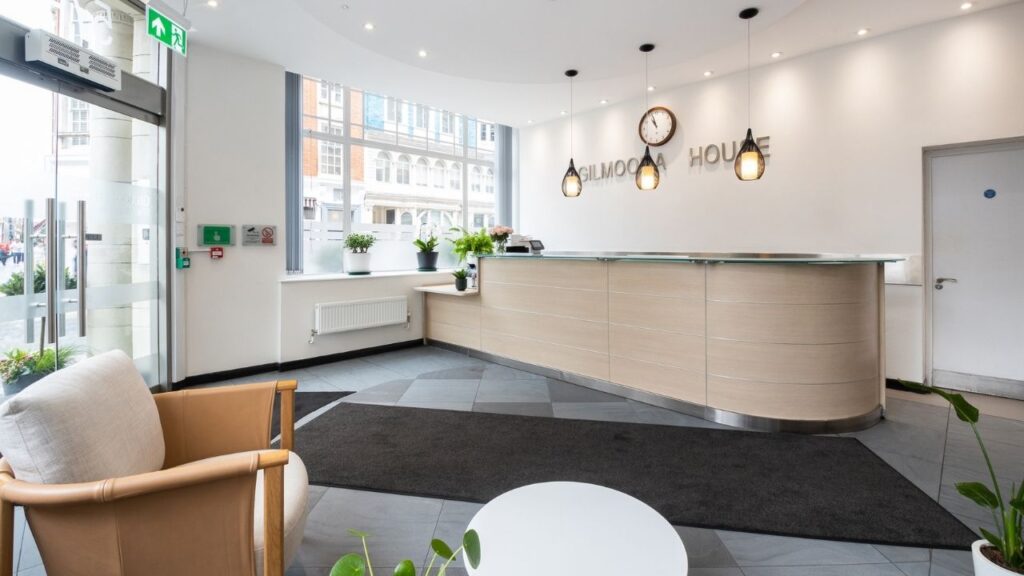
Located at 57-61 Mortimer Street in Fitzrovia, Gilmoora House offers a professional W1 business address in Central London, approximately 6 minutes walk from Oxford Circus Underground station, with Goodge Street and Tottenham Court Road stations nearby. Its location provides convenient access to the West End’s business district while keeping clients and professionals connected to the wider city.
For solicitors who are looking further into the amenities, the surrounding neighbourhood adds everyday convenience, with cafés and restaurants along Mortimer Street and nearby Charlotte Street offering welcoming settings for coffee meetings and business lunches. This allows solicitors to maintain a professional London presence while accessing different amenities when needed, placing your brands in the middle of vibrant neighbourhoods.
Gilmoora House virtual office packages
Gilmoora House combines this established Fitzrovia location with virtual office services, including mail handling, optional telephone answering, access to meeting rooms and the Business Lounge through selected packages.
| Virtual office package | Mail Only | Mail & Telephone | Mail, Telephone & Business Lounge Access |
| Monthly price | £75 + VAT | £150 + VAT | £220 + VAT |
| Best for | Independent solicitors requiring a professional London business address | Small legal practices seeking professional client communication support | Solicitors requiring occasional physical workspace alongside virtual office services |
| Key services | Business address, mail handling, and discounted meeting room hire | Mail Only benefits, dedicated London telephone number, and personalised call answering | Mail and telephone services, Business Lounge access, and administrative support |
The Mail Only package provides a straightforward starting point for solicitors who primarily need a business address and correspondence handling. The Mail & Telephone package adds support for incoming calls, while the highest-tier package includes Business Lounge access for those who occasionally need a place to work between appointments.
Solicitors can select the services that best match their working arrangements rather than paying for permanent premises they may use infrequently. Before booking, firms should confirm the permitted use of the address and ensure their practising arrangements satisfy relevant regulatory requirements.
Ready to take the next step? Explore our virtual office packages in Central London and find the right fit for your practice. To discuss your requirements, contact our Service Team at enquiries@gilmoorahouse.com or 020 3008 6650.
FAQs about virtual offices for solicitors
1. Is a virtual office suitable for a sole practitioner?
Yes. A virtual office can suit a sole practitioner who works remotely, attends court regularly, or meets clients by appointment. It can provide a professional business address and administrative support without the expense of permanent premises. However, the solicitor must ensure that their practising arrangements satisfy the applicable regulatory requirements.
2. Can I use Gilmoora House’s virtual office address for my legal practice in London?
Gilmoora House’s virtual office address can be used as a business address, subject to the terms of your chosen package and its permitted uses. However, a virtual office address does not automatically meet all requirements for a solicitor’s practising address. Solicitors should confirm their specific obligations with the Solicitors Regulation Authority (SRA) before using the address for regulatory purposes.
3. How does Gilmoora House handle confidential mail for solicitors?
Gilmoora House offers mail handling, with options for forwarding, holding, or scanning available through its virtual office services. Before choosing a package, solicitors should confirm the specific procedures for receiving and processing correspondence, including how urgent and confidential documents are handled. Firms remain responsible for ensuring their arrangements meet their professional confidentiality and data-protection obligations.
4. Which Gilmoora House virtual office package is best for a sole solicitor or small law firm?
The most suitable package depends on the practice’s requirements.
- Mail Only, at £75 + VAT per month, is suitable for solicitors who primarily need a business address and mail handling.
- Mail & Telephone, at £150 + VAT per month, adds personalised call answering,
- Mail, Telephone & Business Lounge Access, at £220 + VAT per month, provides additional workspace access.
Comparing the services included in each package with the practice’s day-to-day needs can help determine the most appropriate option.