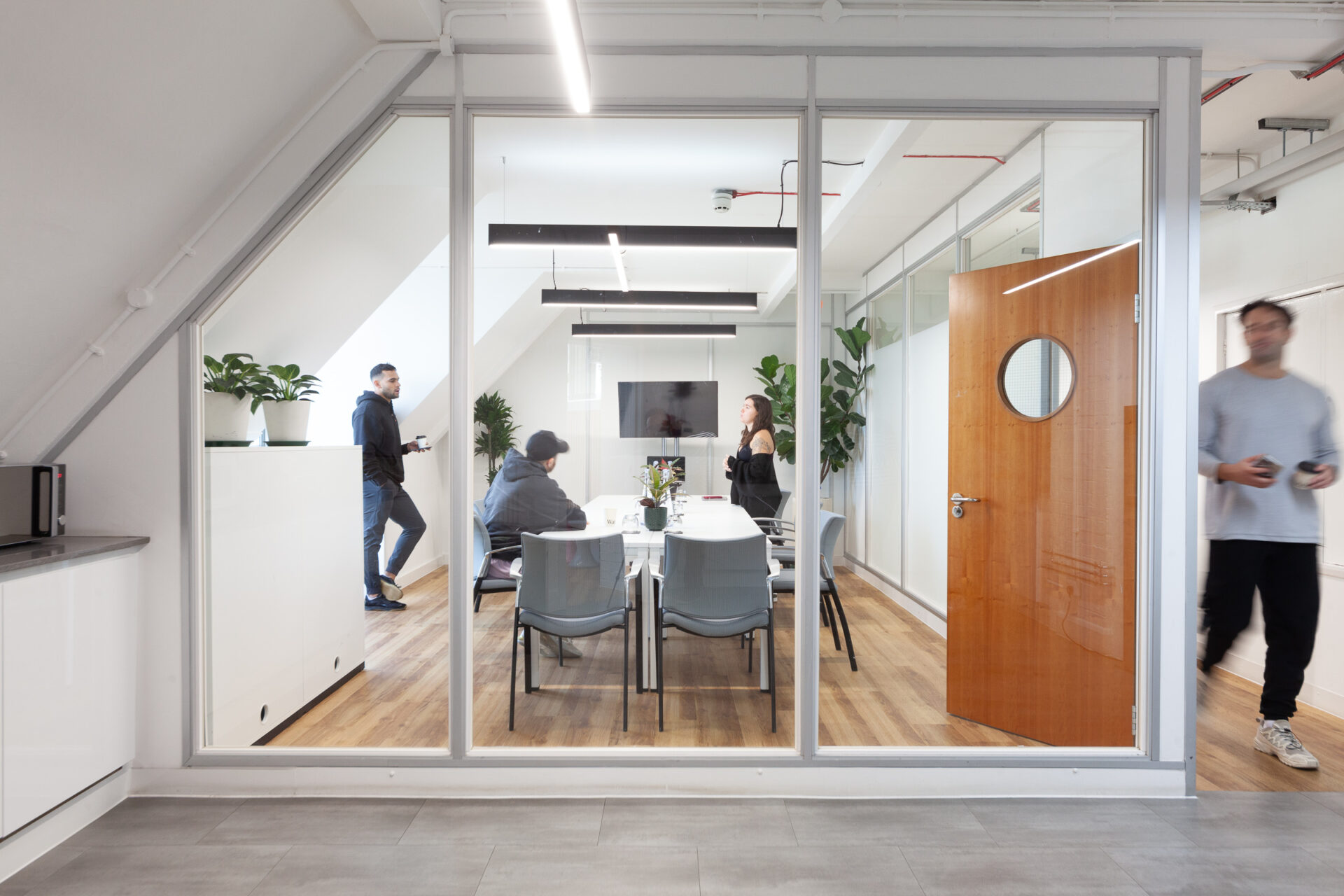

Growing from 5 to 20 employees changes what your business needs from an office. More desks, meeting space and shared facilities may be necessary, but the right setup depends on how your team works and how often employees attend.
This guide covers the main considerations for growing businesses, including office capacity, layout, costs and flexible serviced offices in Central London.
When does your business need more office space?
A growing headcount does not automatically mean you need a larger office. Before settling for additional space, review how employees use the existing premises, how often they attend and how many workstations are available during busy periods.
These signs may indicate that your current office is reaching capacity:
- Insufficient workstations: Employees struggle to find available desks, share workstations unnecessarily or use areas that are not designed for regular working.
- Meeting room shortages: Rooms are frequently booked, making it difficult to arrange internal discussions, client appointments and confidential conversations.
- Increasing recruitment requirements: Planned hiring over the next 6–12 months may exceed your current seating capacity.
- Limited storage and facilities: Documents, equipment, and office supplies occupy desks or communal areas, reducing usable workspace.
- Declining employee productivity: Overcrowding, noise and limited collaboration areas make it harder for employees to concentrate and work comfortably.
Reviewing office utilisation alongside your recruitment plans will help you decide if you need more space, a different layout or a more flexible workspace arrangement.

Key considerations when scaling up your team to 20 employees
Expanding your office involves more than adding desks. You need to understand how your team works, estimate future occupancy and choose a workspace that supports daily operations. These considerations can help you plan an office expansion that meets current requirements while allowing room for further growth.
1. Calculate how many desks your growing team needs
Start by estimating how much usable office space your business needs for its current employees and anticipated growth. Your calculation should account for more than desk numbers. Consider workstation spacing, circulation areas, meeting rooms, private call spaces, storage and communal facilities.
Actual desk usage is also important. A team of 20 employees may not need 20 permanent workstations if some people work remotely or follow hybrid schedules. ACI recommends allowing a sparse space of around 10-20% above recorded peak desk usage to accommodate busier days and future growth.

The table below offers an indicative comparison of workspace requirements as a business grows. Actual requirements will depend on the office layout, working arrangements and facilities included.
| Business size | Suggested desk capacity | Approximate space requirement | Main workspace requirements |
| 5 employees | 5 desks | 250-750 sq ft | Individual workstations, a small meeting area, and basic storage |
| 10 employees | 8-10 desks | 600-1,500 sq ft | Additional workstations, meeting facilities, and shared areas |
| 15 employees | 12-15 desks | 1,000-2,250 sq ft | More collaboration space, private meeting areas, and storage |
| 20 employees | 16-20 desks | 1,500-3,500 sq ft | A larger office layout, multiple meeting spaces, and room for further recruitment |
If you do not need a permanent private office for every employee, you can also explore flexible options to rent a desk space in London. This can provide additional workstations as your team grows without committing to a larger private office prematurely.
2. Choose a layout that supports different working activities

As teams grow, office layouts should accommodate focused work, team discussions, client meetings and informal collaboration. A practical office layout may include:
- Open-plan workstations for everyday tasks and communication between colleagues.
- Private rooms for focused work and confidential conversations.
- Meeting rooms for client appointments, presentations and team discussions.
- Breakout areas for informal conversations and short breaks.
- Quiet spaces for employees who need fewer distractions.
When comparing serviced office spaces, look beyond the number of desks. Check the layout, meeting facilities and shared amenities to make sure they suit your team’s working requirements.
3. Plan for your current and future headcount

Your office expansion should account for planned recruitment as well as the employees already on your payroll. Review your hiring plans over the next 12–24 months and consider how new departments, management roles and changing team structures may affect workspace requirements.
Your forecast should account for:
- Current full-time and part-time employees.
- Planned recruitment and expected start dates.
- Employees who work remotely or follow a hybrid work model.
- The number of people likely to attend the office at the same time.
- Potential changes to departmental structures and team responsibilities.
This helps you estimate the number of workstations required without paying for desks that may remain unused. Coworking spaces could also be considered as an option for businesses with uncertain headcount, as teams can add desks or move into larger offices as their requirements change.
4. Consider hybrid working and shared desks
Not all employees need to work from the office every day. Businesses adopting a hybrid work model should review average office attendance and peak usage to determine how many permanent workstations they need. This helps avoid paying for desks that may remain unused on certain days.

Desk booking systems, shared workstations and coordinated team schedules can help make better use of available floor space. Hot desking can further reduce the need for additional desks, provided employees have reliable access to suitable workstations. At the same time, a well-planned hybrid workplace should maintain opportunities for in-person collaboration and communication between remote and office-based employees.
5. Set a realistic expansion budget

A larger office usually involves more than an increase in monthly rent. Before comparing properties, calculate the full cost of occupying and operating the space. This includes upfront expenses, recurring charges and potential costs associated with future changes to your workspace.
A cost comparison table can help businesses evaluate different expansion options.
| Cost category | What to assess |
| Occupancy costs | Rent, business rates, utilities and service charges |
| Setup costs | Furniture, equipment, internet installation and fit-out |
| Relocation costs | Removal services, business downtime and address changes |
| Ongoing facilities | Cleaning, maintenance, meeting rooms and IT support |
| Future expansion | Additional desks, office upgrades and contract changes |
Compare the cost of keeping your current office with moving to a larger space. A serviced office can help keep initial expenses lower, as furniture, shared facilities and day-to-day services are often included in the monthly rent.
6. Review location, accessibility and employee amenities
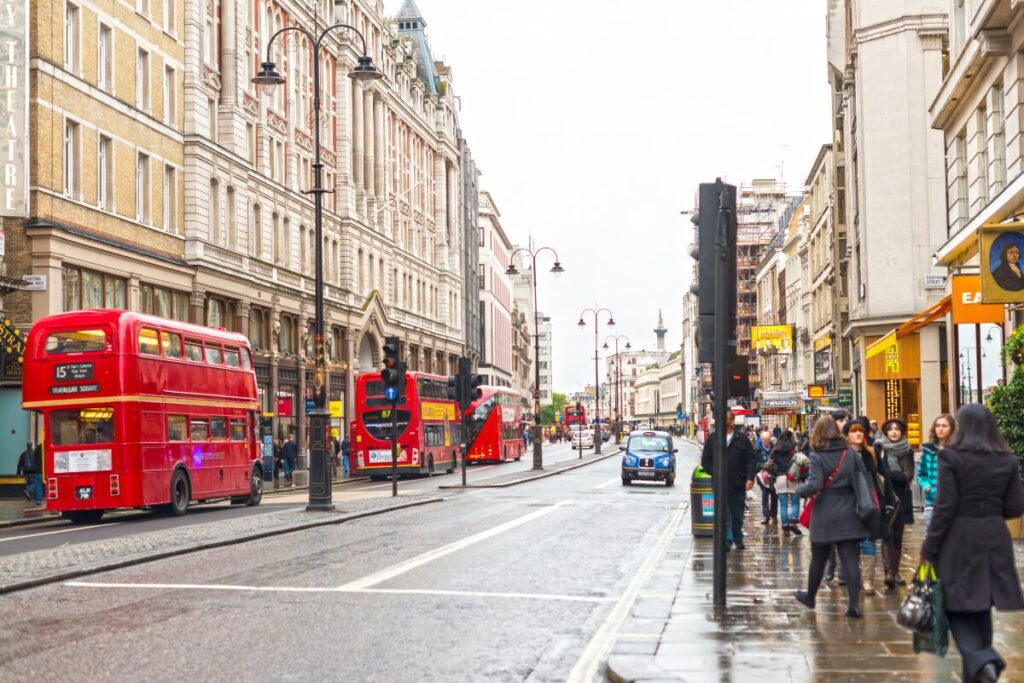
Your office location should reflect your industry, client base and employees’ commuting needs. Different parts of Central London appeal to different business sectors. Soho and Fitzrovia attract creative, media and technology businesses, while the City of London has an established concentration of financial and professional services. King’s Cross and Paddington also offer transport connections that may suit businesses with wider regional or international links.
When comparing locations, consider:
- Walking distance to transportation systems like Underground and railway stations.
- Connections to the main routes used by employees and clients.
- Nearby cafés and restaurants for lunch breaks and informal meetings.
- Shops and everyday amenities within walking distance.
- Facilities that support employees’ working routines and wellbeing.
A convenient location can make commuting easier and help clients reach your office without unnecessary travel. Fitzrovia, for example, has several nearby Underground stations, including Oxford Circus, Goodge Street and Tottenham Court Road. The Elizabeth line at Tottenham Court Road also provides connections across London.
7. Prioritise flexible contracts and room for future growth

Your workspace requirements may change as your business recruits more employees or restructures its teams. Choosing an office arrangement with suitable contract flexibility can help you manage these changes without relocating every time your headcount increases.
Before signing, review the following terms:
- Minimum contract length and notice period.
- Options to upgrade to a larger office.
- Availability of additional space within the same building.
- Conditions for renewing or terminating the agreement.
- Fees or restrictions associated with changing your office arrangement.
Four ways to expand your office without relocating
Business growth often creates pressure for more office space, but moving to a larger premises is not always practical. Existing lease commitments, relocation costs, limited availability, and potential disruption can make moving a difficult decision.
If your current premises can still accommodate your business, you may be able to increase capacity by making better use of the existing space. Alternatively, if you need to move but cannot relocate immediately, temporary workspace arrangements can provide additional room for your team while you secure more suitable long-term premises. Here are some practical ways to manage your growing space requirements without disrupting business operations.
1. Reconfigure your existing office layout
Review underused areas, unnecessary furniture and storage arrangements that could be reorganised to create more usable space. You could rearrange workstations, introduce modular furniture or repurpose rooms that are rarely used.
Multi-purpose areas can also help your team make better use of the existing floor space without increasing the size of your premises.
2. Make better use of shared facilities
Shared meeting rooms and breakout areas can reduce pressure on your main office by providing separate spaces for discussions, collaboration and informal meetings. Introduce room booking systems and more flexible schedules to prevent facilities from remaining unused for long periods.
For example, employees could use shared areas for informal discussions rather than occupying meeting rooms throughout the day. This can free up existing workstations and reduce pressure on the main office.
3. Add more office space within the same building
If your current office cannot accommodate additional desks, ask your landlord or workspace provider about adjoining suites or other available offices within the building.
Expanding within the same premises allows you to accommodate new employees while retaining your business address. It can also minimise disruption to staff, clients and everyday operations compared with relocating to another part of London.
4. Introduce flexible workspace arrangements
Shared workstations and coworking facilities can provide extra capacity for teams with hybrid schedules. Departments can arrange their office days so employees share available desks rather than requiring a permanent workstation for everyone.
Bookable desks also give employees a place to work whenever they come into the office. Businesses can consider different flexible office space arrangements in London to make better use of their existing space while accommodating changing attendance patterns.

Scaling your team with flexible serviced offices at Gilmoora House
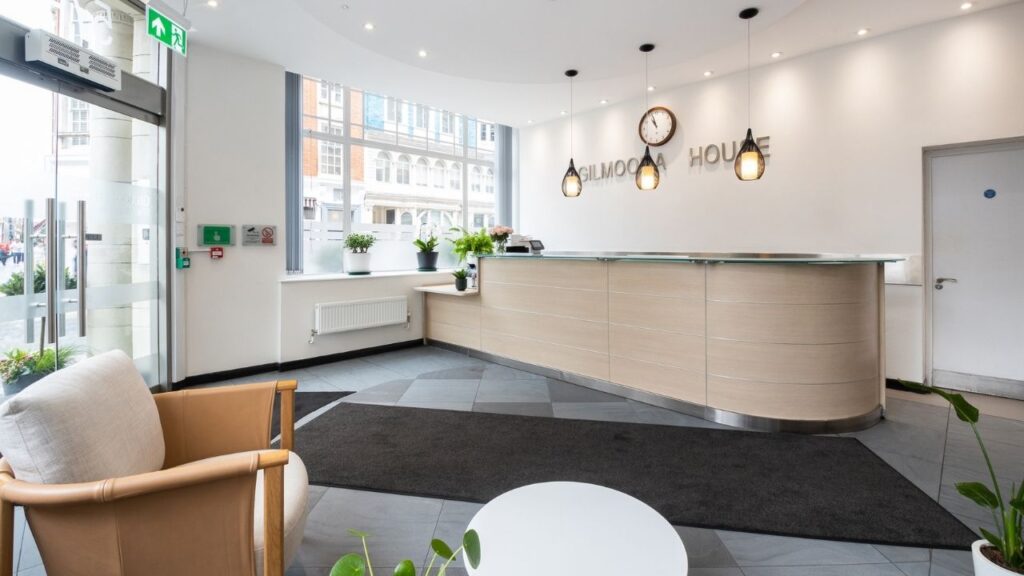
Located at 57–61 Mortimer Street, Fitzrovia, Gilmoora House provides furnished private offices and shared facilities for businesses looking for a flexible workspace in Central London.
Private offices for different team sizes
Gilmoora House offers fully furnished private offices accommodating teams of 2–40+ desks. Your businesses can choose an office that suits its current headcount and enquire about larger spaces as your team grows, subject to availability.
Meeting rooms and shared facilities
Gilmoora House has six fully equipped meeting rooms, accommodating 4-28 people. Each room includes video conferencing equipment, presentation screens, complimentary tea, coffee and sparkling water. Rooms are available to members and external clients by the hour, half-day or full day.
Additional facilities include:
- High-speed internet: A standard shared connection of 100–500 Mbps, with dedicated connectivity options of up to 10 Gbps to the building.
- Reception and support: Weekday reception, administrative assistance and on-site Service Coordinators.
- Building access and security: 24/7 access, CCTV monitoring and night security patrols.
- Office services: Weekday cleaning, printing, scanning and photocopying.
- Shared spaces: Communal kitchens, breakout areas, complimentary refreshments and showers.
These facilities give your team access to the practical resources needed for everyday office operations without having to manage each service independently.
Day-to-day support for your business
Gilmoora House’s on-site team can assist with everyday workspace requirements, including room bookings, printing, post and deliveries, guest arrangements, maintenance requests and general enquiries.
As your team grows, the team can also advise on your changing workspace requirements and help you consider the space that may suit your next stage of growth. This support makes managing your office more straightforward, leaving you with more time to focus on business operations.
A well-connected Fitzrovia location
Gilmoora House provides a convenient base for growing teams, with several Underground stations just a short walk away in Fitzrovia:
- Oxford Circus: Approximately 6 minutes on foot.
- Goodge Street: Approximately 7 minutes on foot.
- Tottenham Court Road: Approximately 8 minutes on foot.
The surrounding neighbourhood also has a range of restaurants near the office in Fitzrovia for business lunches and client meetings, as well as independent coffee shops in Fitzrovia for a coffee break or informal catch-up.
As your business continues to grow, choose a workspace that can adapt to your changing requirements. Contact us at enquiries@gilmoorahouse.com or 020 3008 6650 to discuss your requirements, explore available spaces or arrange a viewing.
FAQs about tips to expand office space
When should my business move to a larger office?
Consider moving when your current premises no longer provide enough workstations, meeting space or facilities for daily operations. Review peak office attendance, planned recruitment and available space before deciding. A layout change or flexible workspace may also resolve capacity issues without requiring a full relocation.
What costs should I budget for when expanding my office?
Budget for monthly rent, business rates, utilities and service charges, alongside furniture, equipment, fit-out and relocation expenses. You should also account for ongoing cleaning, maintenance, meeting room hire and IT support. Check the full cost breakdown before committing to a new workspace.
How can Gilmoora House’s serviced offices support client meetings and team collaboration?
Gilmoora House has six fully equipped meeting rooms accommodating 4–28 people, suitable for client appointments, presentations, interviews and team discussions. Shared kitchens and communal breakout areas also give employees additional space for informal conversations and collaboration.
If my team grows further, can I move to a larger office at Gilmoora House?
Yes. Gilmoora House offers furnished private offices for teams of 2–40+ desks. If your team expands, you can discuss moving into a larger office to accommodate additional employees and changing workspace requirements. Any move or additional space will depend on availability.
Can businesses enquire about flexible serviced office rental terms at Gilmoora House?
Yes. Businesses can contact Gilmoora House to discuss serviced office rental terms, office availability and arrangements that suit their current requirements. For details about short-term rental options and the minimum rental period, contact enquiries@gilmoorahouse.com or 020 3008 6650 to discuss your requirements and current availability.