

Larger offices support growth, but unused desks, rising overheads, and inflexible leases can quietly drain company budgets. As hybrid work becomes more common, many companies are starting to question whether they are paying for more space than they actually need. Understanding the warning signs of overspending on office space can help reduce costs in business while improving workplace efficiency.
Essential cost for a decent office space in London
- Office rent and space utilisation: Prime office locations in Central London come with some of the highest rental costs in the UK. At the same time, the rise of hybrid working has left many businesses paying for desks and office space that are not fully utilised, increasing the overall cost per employee.
- Office equipment and operational expenses: Beyond rent, businesses must cover the cost of office furniture, fit-outs, IT infrastructure, internet services, utilities, maintenance, and cleaning. These day-to-day operational expenses can significantly add to the total cost of occupancy.
- Hidden and rising property-related costs: In addition to rent and operational expenses, businesses must account for service charges, building management fees, sustainability initiatives, environmental compliance requirements, and other occupancy-related costs. These expenses continue to rise, with BDO reporting that office service charges increased by 9% in 2024, following a 15% increase the previous year, placing further pressure on workplace budgets.
Signs of overspending on office spaces
Before reviewing your office costs, it is worth assessing how effectively your current workspace is being used. The following signs can help identify whether your office is delivering sufficient value or contributing to unnecessary costs in business.
| Sign of overspending | Why it matters |
| Low desk utilisation across the office | Empty desks and unused meeting rooms can significantly increase the real cost per active employee |
| Lease terms that no longer match your team size | Businesses may remain tied to oversized offices that no longer adapt to workforce needs |
| Office costs are growing faster than your business | Workspace expenses taking up a growing share of operating costs may reduce long-term financial flexibility |
| Paying premium rent for less business value | Oversized offices can increase overheads and put unnecessary pressure on business finances. |
4 steps to calculate your real cost per desk
Step 1: Calculate your total annual office costs
Start by identifying all workplace expenses over 12 months, not just rent. Include service charges, utilities, maintenance, cleaning, internet, insurance, office management, and any other occupancy-related costs to help you have an overall picture of where the expense is allocated.
Step 2: Calculate your base cost per desk
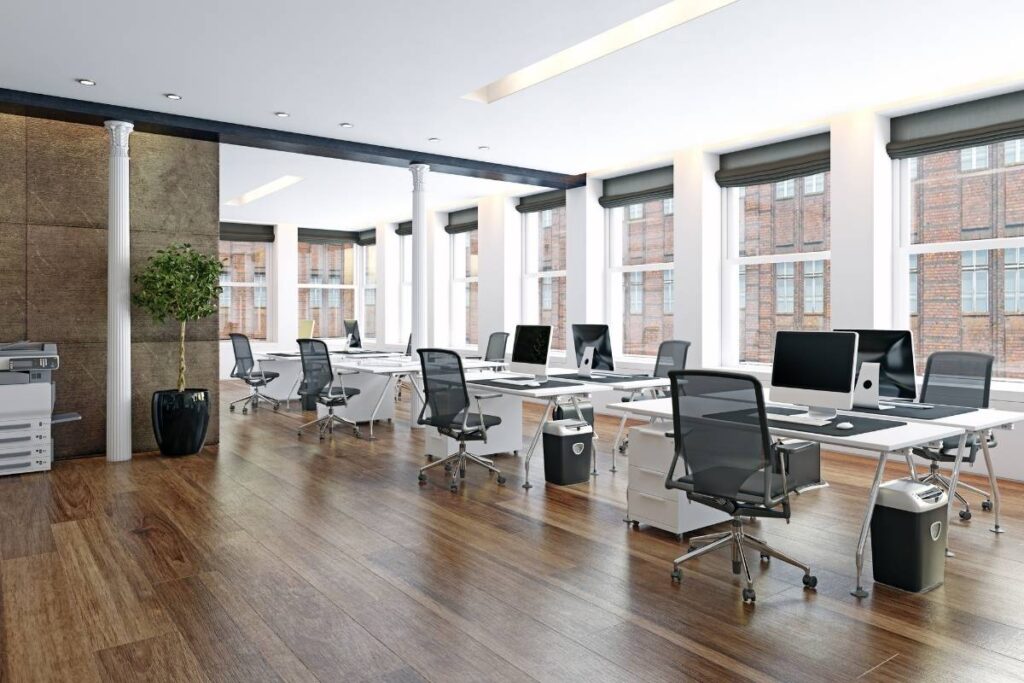
Determine the total number of desks or workstations available within your office. This provides the baseline capacity of your workspace. Divide your total annual office costs by the number of available workstations:
Total annual office costs ÷ Number of workstations = Cost per desk
This figure shows the average cost of maintaining each desk within your office.
Step 3: Measure actual desk utilisation
Review how many desks are regularly used rather than simply available. In hybrid workplaces, a significant portion of desks may remain vacant for much of the week, reducing overall workspace efficiency.
Step 4: Calculate your real cost per active desk
Compare your office capacity with actual occupancy levels. For example, an office with 40 desks may appear cost-effective on paper, but if only 24 desks are consistently used, the effective cost per active workstation increases considerably. This provides a more accurate picture of your true workplace costs and highlights potential opportunities to reduce costs in the business.
Actionable tips to reduce costs in business without hurting productivity
Switching to serviced office spaces
One of the most practical ways to reduce business costs without affecting productivity is to reassess your workspace model. Flexible and serviced offices can significantly reduce upfront expenses by eliminating the need for costly fit-outs, furniture purchases, utility contracts, and ongoing maintenance.
For startups, growing businesses, and organisations that want to maintain a presence in London’s prime commercial districts, reducing office costs can be reassessing how much space they truly need and exploring more flexible workspace models. This approach allows them to retain the benefits of a prestigious London address while avoiding the inefficiencies and costs associated with underutilised office space and traditional long-term leases.

Beyond cost savings, businesses can also benefit from access to shared meeting rooms, reception services, breakout areas, and prestigious business locations that might otherwise be financially out of reach. This allows companies to maintain a professional working environment while avoiding the long-term commitments and overheads associated with conventional office space.
Adopting hybrid work arrangements with flexible offices
Hybrid working can help businesses reduce the amount of office space they need while maintaining productivity. With 27% of workers in Great Britain working in a hybrid arrangement, many organisations are reassessing how much permanent workspace is truly required.
Rather than paying for a full-time office, businesses with hybrid teams can choose workspace arrangements that match their actual office attendance. For teams that typically work on-site only three or four days a week, this can help reduce occupancy costs while maintaining access to a professional workspace. Gilmoora House offers flexible office solutions designed to support this way of working.
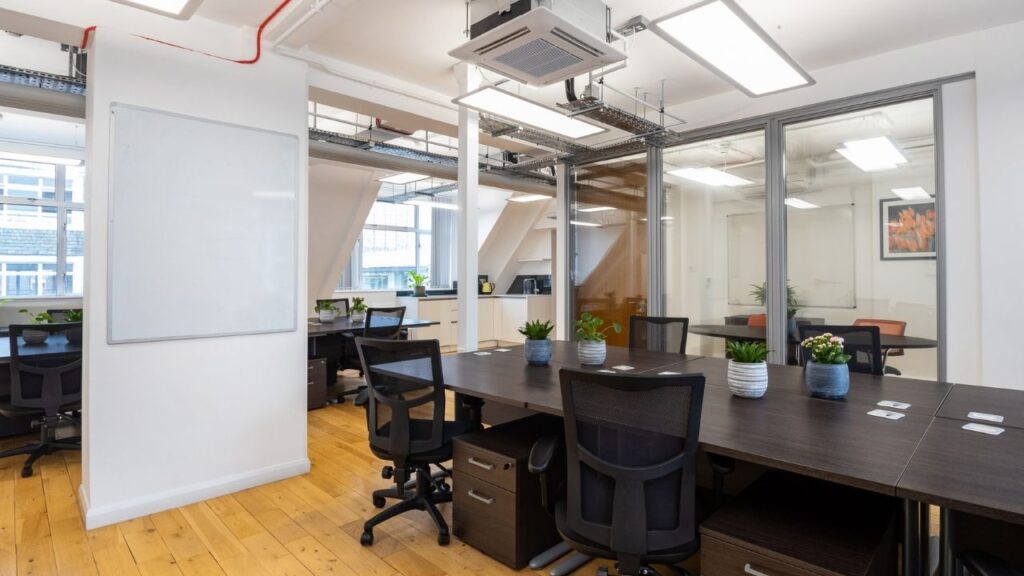
In addition to lowering occupancy costs, hybrid models can support employee satisfaction and retention by providing greater flexibility in how and where people work.
Sharing amenities and meeting facilities
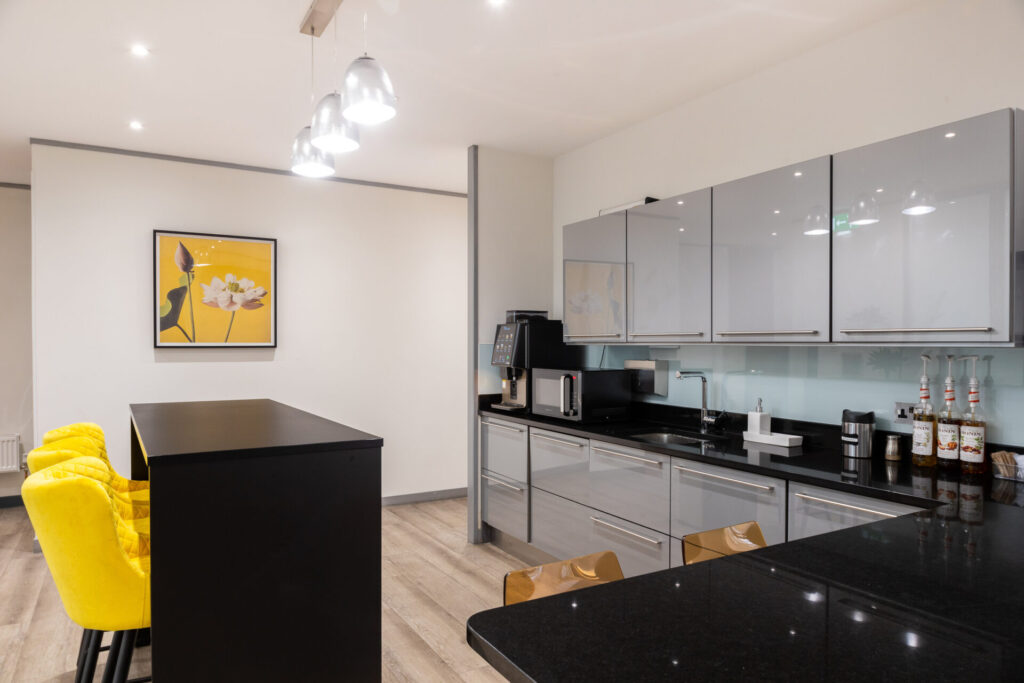
Shared facilities can help businesses avoid the costs of maintaining spaces used occasionally. Rather than dedicating valuable office space to rarely used meeting rooms or communal areas, companies can access shared amenities as needed.
This may include reception services, breakout zones, meeting rooms, kitchens, and event spaces. By sharing these resources, businesses can improve space efficiency while keeping occupancy costs under control.
Reduce costs in business with flexible offices at Gilmoora House
Gilmoora House offers serviced offices designed to support businesses of different sizes without the overheads of traditional long-term leases. With more than 15 years of experience in London workspace solutions, Gilmoora House provides office configurations ranging from 2-desk setups to larger team spaces for up to 40 desks, helping businesses scale more efficiently.
Why Gilmoora House is the ideal choice for creative agencies:
- Enjoy a prime location in the heart of London: From serviced offices and flexible office solutions to shared workspaces, Gilmoora House provides a range of workspace options that allow businesses to maintain a prestigious Fitzrovia address while choosing a setup that aligns with their team size, working style, and budget.
- Access endless amenities: breakout spaces, kitchens on every floor, high-speed internet, business lounge access,… all supplies meet quality requirements for effective working sessions.
- Sustainability practices through renewable energy use, LED lighting upgrades, responsible waste management, and Planet Mark Certification as part of its broader net-zero goals.
Ready to find your new office in the heart of London? Contact our Service Team at enquiries@gilmoorahouse.com or call 020 3008 6650 to book your tour today.
FAQ
1. What is the most effective way to reduce office costs without downsizing?
One of the most effective approaches is to improve space efficiency through flexible office solutions and hybrid working arrangements. This allows businesses to reduce unnecessary occupancy costs while maintaining productivity, employee satisfaction, and room for future growth.
2. Can a serviced office help reduce business costs?
Yes. Serviced offices can help reduce business costs by including essentials such as furniture, high-speed internet, utilities, reception services, cleaning, maintenance, and meeting facilities within a single monthly fee. They are especially valuable for businesses that want to maintain a professional presence in prime London locations while keeping occupancy costs predictable. Startups, scaling businesses, hybrid teams, and companies testing new markets can all benefit from the flexibility and lower overheads offered by serviced office arrangements.
3. Which office solution is best for startups looking to control costs?
For many startups, a serviced office offers the best balance of flexibility and cost control. At Gilmoora House, businesses can choose office spaces ranging from 2 to 40 desks, with flexible terms that allow teams to scale up as they grow without committing to long-term leases or significant setup costs.