
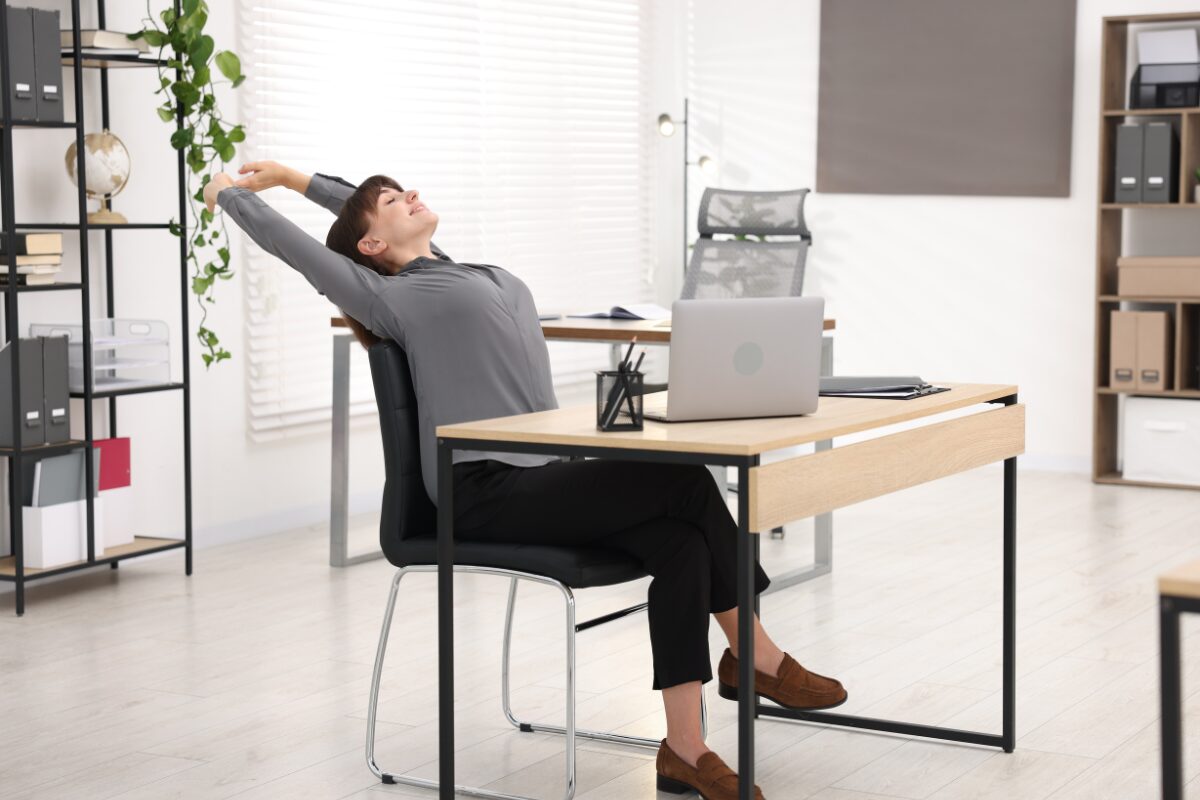
Incorporating mindfulness into your workday doesn’t require long pauses or drastic changes; even a few intentional minutes can make a difference to your focus and wellbeing. This guide explores simple ways and practical exercises you can use to create an effective mindfulness session at work. By integrating these small habits into your routine, you can manage stress better, improve clarity, and maintain a productive mindset throughout the typical London business day.
Why Mindfulness Matters in the Workplace?
Understanding why mindfulness matters in the workplace starts with its proven impact on mental clarity and resilience. A 2025 study published in BMC Psychology found that mindfulness is significantly associated with lower perceived stress when it hardwires a healthy habit into your workday. Beyond stress management, mindfulness improves focus and attention after 8 weeks of consistent practice, allowing professionals to stay engaged with complex tasks without succumbing to distractions. By fostering a calmer mental state, these techniques also support better decision-making and cognitive performance, ensuring that teams can navigate high-pressure situations with greater precision and a more balanced perspective.

Quick Mindfulness Exercises You Can Do at Your Desk
These short, at-desk exercises are designed to fit into a busy schedule, providing immediate relief from the mental and physical pressures of the workday. By incorporating these small pauses, you can have an effective session without the need for formal meditation space.
1-minute sensory reset
This grounding exercise is designed to shift your attention away from mounting stress and pull you back into the present moment. It helps alleviate overthinking, reduce anxiety, and quickly stabilise your focus before moving on to your next task.
How to do: Use the 5–4–3–2–1 method by identifying five things you can see, four you can feel, three you can hear, two you can smell, and one thing you notice internally.
Micro body scan
The micro body scan is a short awareness practice that helps you reconnect with physical sensations. It is excellent for releasing built-up stress, improving posture awareness, and reducing the physical discomfort that comes from sitting for long periods.
How to do: Mentally scan your body from head to toe, or focus specifically on your neck, shoulders, and back. Notice any tension or sensations without trying to change them.
Mindful typing pause
This brief pause encourages reflection before you respond to digital communications. It reduces impulsive messaging and ensures your communication remains clear, professional, and composed, even under pressure.
How to do: Before hitting “send” on an email or message, stop for 10–15 seconds, take a steady breath, and notice your emotional state.

Single-task reset
This exercise trains your brain to avoid the pitfalls of multitasking and cognitive overload. By dedicating yourself to one action, you improve your concentration levels and significantly increase the overall quality of your work output.
How to do: Pick one small task and complete it slowly with your full attention, intentionally avoiding all other distractions until it is finished.
Posture check-in
A posture check-in serves as a quick physical and mental reset. It enhances your immediate physical comfort while preventing long-term strain, helping you maintain better mental clarity throughout the afternoon.
How to do: Sit upright, relax your shoulders, place your feet flat on the floor, and take a few slow, deliberate breaths.

Breathing Techniques to Reset Your Focus
Controlled breathing is one of the fastest ways to regulate your nervous system and regain focus at work. These techniques are simple, discreet, and effective even during busy schedules.

Box breathing (4–4–4–4)
This structured technique is a favourite among high-performance professionals for balancing the mind and body. It is especially effective for lowering stress levels and regaining composure in high-pressure situations.
- How to do: Inhale for 4 seconds, hold for 4, exhale for 4, and hold again for 4 in a steady, rhythmic cycle.
- Benefit: releases intense stress and creates an immediate sense of mental control.
4–7–8 breathing
Designed as a relaxation, this technique acts as a natural tranquilliser for the nervous system. It is perfect for those moments when you need to slow down your system and ease a busy mind.
- How to do: Inhale quietly through your nose for 4 seconds, hold your breath for 7, and exhale forcefully through your mouth for 8 seconds.
- Benefit: Reduces anxiety, calms racing thoughts, and supports better emotional regulation.
Extended exhale breathing
This calming technique leverages the fact that long exhales trigger the body’s parasympathetic nervous system. It is one of the most efficient ways to physically ease tension in a matter of moments.
- How to do: Breathe in for 4 seconds and exhale slowly for 6 to 8 seconds, ensuring the out-breath is noticeably longer than the in-breath.
- Benefit: Activates the body’s relaxation response and rapidly lowers your heart rate.
“One deep breath” reset
Even when you have virtually no time between meetings, this quick reset allows you to pause and re-centre. It is the ultimate tool for regaining composure before a difficult conversation.
- How to do: Take one slow, deep inhale followed by a long, controlled exhale; repeat two or three times.
- Benefit: Instantly lowers acute stress levels and helps you regain clarity and focus.
Movement-Based Mindfulness for Office Workers
Physical stillness for long periods can lead to mental stagnation and physical discomfort. Movement-based mindfulness allows you to bridge the gap between your physical and mental well-being, using gentle, intentional actions to refresh your energy and clear your mind without leaving your workstation.
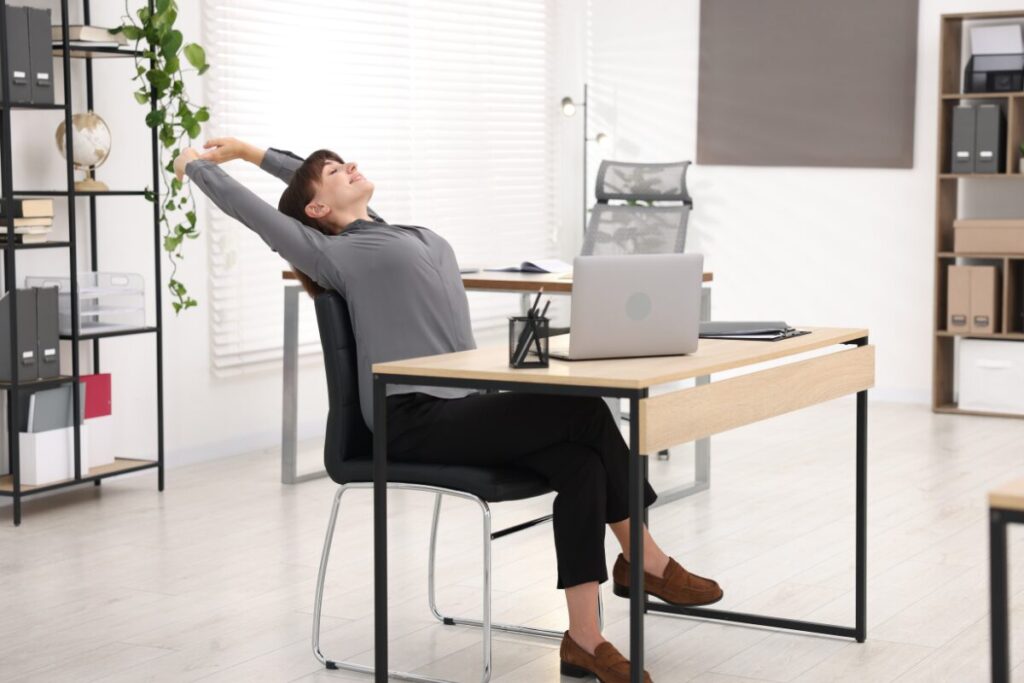
Mindful stretching at your desk
This gentle movement practice combines simple stretching with deep, present-moment awareness. By shifting your focus to the physical sensation of the stretch, you pull your mind away from digital distractions and back into your body.
- How: Slowly stretch your neck, arms, and upper body while paying attention to how each movement feels rather than rushing through it.
- Benefit: Reduces muscle tension, improves circulation, and helps re-energise both body and mind during long periods of sitting.
Seated spinal twist
The seated spinal twist is a focused movement targeting the spine and upper body, areas that often hold the most tension during a workday. It serves as a physical “unwinding” that helps reset your central nervous system.
- A simple seated movement that targets the spine and upper body
- How: Sit upright and gently twist your torso to one side, hold for a few breaths, then switch sides while maintaining steady breathing
- Benefit: Releases stiffness in the back, improves posture, and promotes physical reset.
Shoulder roll release
This small, repetitive movement is specifically designed to relieve the “heavy” feeling in the shoulders caused by prolonged computer use. It is a discreet way to manage stress in real-time throughout the day.
- How: Roll your shoulders forward and backward slowly for 5–10 repetitions while breathing evenly
- Benefit: Eases built-up stress in the neck and shoulders, especially from prolonged computer use, and helps restore a relaxed posture

How to Build a Simple Daily Mindfulness Routine at Work
Building a sustainable mindfulness practice doesn’t require extra hours; it simply involves integrating small, intentional pauses into your existing schedule to maintain a calm and focused professional mindset. To establish a routine that lasts, consider these practical steps:
- Start small but consistent: Commit to just 1–3 minutes per session. This makes it much easier to remember without feeling overwhelmed by your daily workload or time pressure.
- Anchor practices to existing habits: Link your mindfulness to daily achievements, such as finishing one task, checking your first email, or finishing lunch. This ensures the practice fits naturally into your workflow.
- Combine different types of exercises: Keep your routine engaging by doing light movement in the morning, breathing techniques during breaks, and quick mental resets in the afternoon to stay sharp.
- Use reminders if needed: Set gentle calendar alerts, use sticky notes on your monitor, or set simple phone timers to prompt your short breaks throughout the day. It should be a reminder for you to take care of your health besides working.
- Adapt to your energy levels: Listen to your body and adjust. Choose calming breathing exercises during high-stress moments and light stretch practices when you start feeling sluggish.
Elevate Your Workday with Mindful Spaces at Gilmoora House
At Gilmoora House, we understand that a productive workday also requires an environment that actively supports your mental well-being. Incorporating mindfulness into your routine is much easier when your surroundings are designed for composure and clarity. Our Fitzrovia hub is designed to be a sanctuary of focus and calm, providing the infrastructure you need to integrate mindfulness into your professional life.
Why Gilmoora House is your best mindful workspace:
- Utilise stylish breakout areas: Take a break from your screen in our thoughtfully designed lounges, perfect for a mental reset or informal collaboration.
- Enjoy communal kitchens: Stay refreshed and nourished in our modern kitchen spaces, stocked with complimentary drinks like tea, coffee, and sparkling water.
- Access a green workspace: Experience the benefits of a workspace that incorporates natural elements to enhance overall well-being.
- Benefit from our service coordinators: Our friendly team handles the logistics and technical support, allowing you to focus entirely on your work without unnecessary stress.
- Stay in a prime Fitzrovia location: Enjoy the vibrant yet peaceful atmosphere of W1, with excellent transport links and local amenities just steps away.
If you want a workspace that helps your team feel inspired and connected, Gilmoora House offers the perfect environment.