Creating a sustainable workplace is no longer just a trend; it is a necessity for modern businesses. In this guide, we explore seven practical ways to make your office more eco-friendly, helping you reduce costs and attract talent while protecting the environment from our base in Central London.
What are sustainable office practices?
Sustainable office practices refer to the operational habits and strategies a business adopts to minimise its environmental impact. This ranges from reducing energy consumption and waste to choosing ethical suppliers. The goal is to ensure that daily work contributes to a healthier planet without sacrificing productivity or profitability.

Why do sustainable office practices matter for your business?
Transitioning to a green office is not just good for the earth; it provides tangible benefits for your team’s morale and your company’s bottom line.
- Save overhead costs: Reducing energy usage and waste lowers utility bills and procurement costs. This improves your cash flow, allowing you to reinvest those into business growth.
- Improve brand reputation: Clients and investors increasingly prefer environmentally responsible partners. Demonstrating green credentials differentiates you from competitors, helping you rise above and build customer loyalty.
- Enhance employee well-being: Green workspaces actively improve mental health. Research indicates that biophilic environments can increase creativity by 15% and reported well-being by 15%. A clean and green environment reduces health problems, ensuring your team remains productive and engaged.
- Regulatory compliance: Adhering to sustainability standards helps you meet UK net-zero targets. This prevents potential fines or legal issues, ensuring your business is future-proofed against tighter environmental regulations.
7 Simple sustainable office practices to implement today
Sustainability does not require a complete overhaul of your operations. Here are seven actionable tips that any team can start today to build a better work environment.
1. Adopt a digital-first mindset
A digital-first mindset involves actively replacing paper-based workflows with cloud-based alternatives. Rather than relying on physical copies that clutter the office and drain resources, this approach prioritises efficiency and accessibility. It allows your team to access documents from anywhere while drastically cutting down on the consumables that typically fill office bins.
To make this transition effective, you should focus on modernising your core administrative habits:
- Utilise cloud storage: Move files to platforms like Google Drive or SharePoint to eliminate the need for filing cabinets.
- Implement digital signatures: Use tools like DocuSign for contracts to avoid the cycle of printing, signing, and scanning.
- Encourage dual monitors: Providing two screens reduces the need for staff to print documents just to cross-reference them.
The impact of these small changes is substantial, significantly reducing your paper consumption and toner waste, effectively decluttering your workspace while protecting global forests.

2. Optimise your energy usage
Optimising energy usage involves auditing and adjusting how your office consumes electricity to eliminate “vampire power.” Many devices continue to drain power even when they appear to be off, and lighting often remains active in empty rooms. Identifying these invisible drains is one of the fastest ways to lower your office’s energy bills.
You can reduce your consumption immediately by implementing these simple technical adjustments:
- Switch to LED lighting: Replace halogen bulbs with LEDs, which use up to 75% less energy and last significantly longer.
- Install motion sensors: Ensure lights automatically turn off in meeting rooms, kitchens, and bathrooms when they are unoccupied.
- Enforce sleep modes: Configure all computers and monitors to enter deep sleep mode after 10 minutes of inactivity.
Over the course of a year, these small adjustments can reduce your energy bills by a significant margin, freeing up budget for other business priorities. The result is a drastic lowering of your carbon footprint.

3. Create a clear recycling system
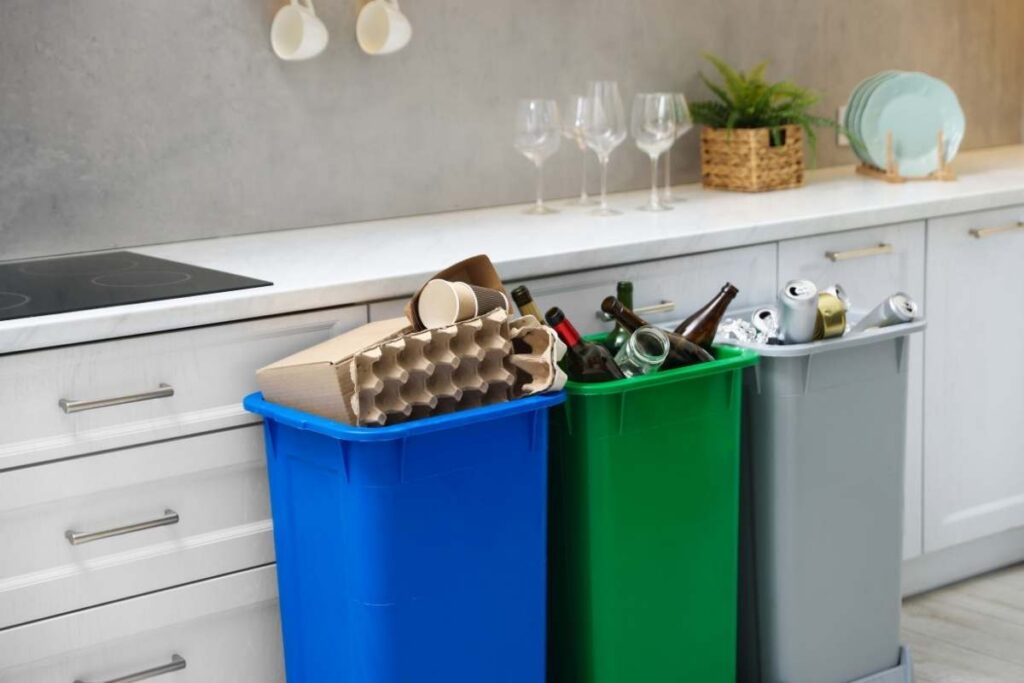
A robust recycling system goes far beyond placing a single bin in the kitchen; it requires sorting waste at the source to prevent contamination. When recyclables are mixed with food waste or plastics, the entire batch often ends up in a landfill. Therefore, success depends on making it as easy as possible for your team to do the right thing.
You can build a culture of responsibility by structuring your disposal areas effectively:
- Remove under-desk bins: Centralise waste disposal to force staff to stand up and sort items consciously.
- Use clear signage: Label bins explicitly with categories like “Paper Only,” “Food Waste,” and “Glass” to avoid confusion.
- Partner with ethical waste collectors: Ensure your waste provider actually recycles the materials rather than diverting them to landfill.
This system reduces the volume of waste sent to landfills and fosters a sense of collective responsibility. It turns a daily chore into a visible commitment to the environment, reminding your team that their small actions matter.
4. Encourage sustainable commuting
This practice focuses on reducing the carbon emissions generated by your team getting to and from the workplace. While you cannot control every aspect of their journey, you can provide incentives that make green travel the most attractive option. This shifts the commute from a daily burden to an opportunity for health and sustainability.
To support your team in making greener choices, consider offering the following benefits:
- Promote Cycle-to-Work schemes: Offer loans for bikes and ensure your office has secure storage and showers.
- Support hybrid working: Allow staff to work from home 1-2 days a week to cut their weekly travel emissions by 20-40%.
- Offer public transport loans: Provide interest-free season ticket loans to encourage staff to take the tube or bus rather than driving.
By encouraging these shifts, you lower your company’s Scope 3 emissions (indirect emissions) significantly. Furthermore, active commuting often improves staff physical health and work-life balance, leading to a more productive workforce.

5. Source eco-friendly office supplies
Sustainable procurement means choosing products that are made from non-toxic recycled materials, and have a long lifespan. Every pen, notepad, and cleaning spray you buy has an environmental cost. By shifting your purchasing power to ethical brands, you reduce the demand for virgin plastics and harmful chemicals.
You can start greening your supply chain by making smarter choices for everyday items:
- Buy refillable stationery: Choose pens and markers that can be refilled rather than single-use plastics.
- Select recycled paper: Ensure all printer paper is 100% post-consumer recycled (PCR).
- Switch cleaning products: Use non-toxic, biodegradable cleaning agents to improve indoor air quality and reduce water pollution.
This strategy supports the “circular economy” and ensures your daily operations do not contribute to plastic pollution.
6. Integrate biophilic design and greenery
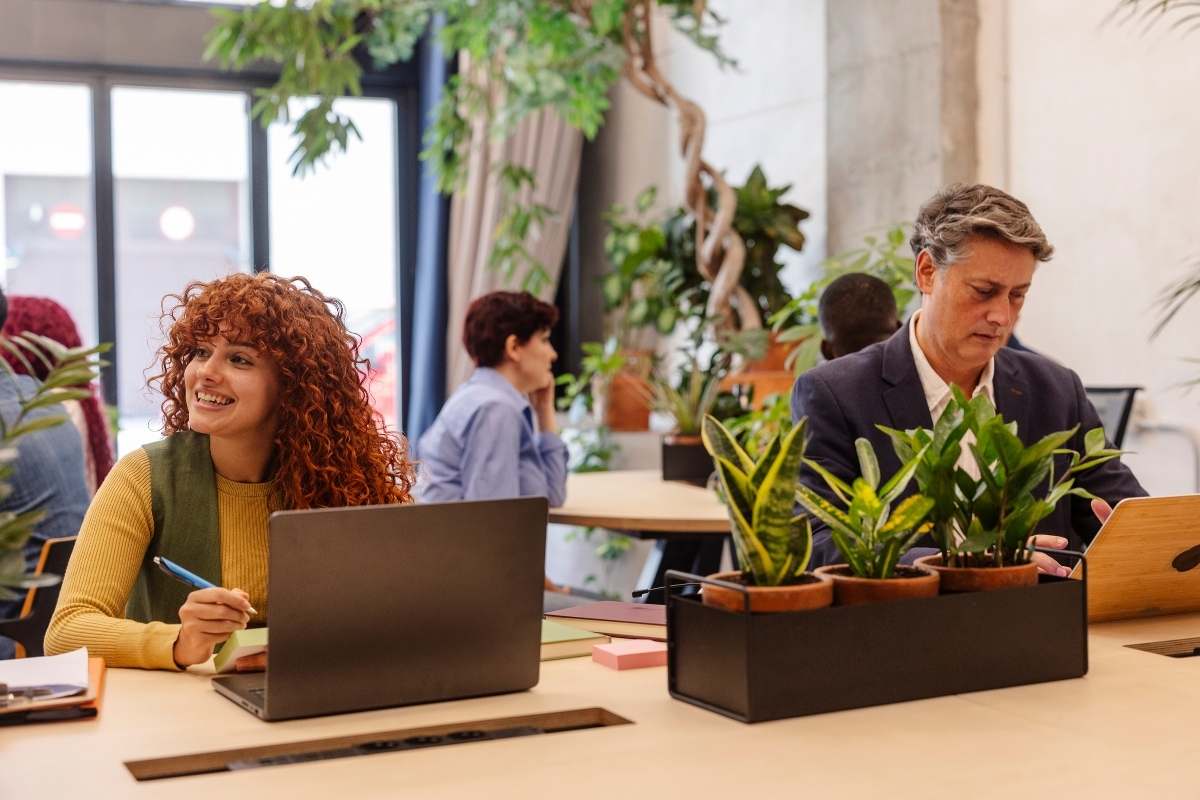
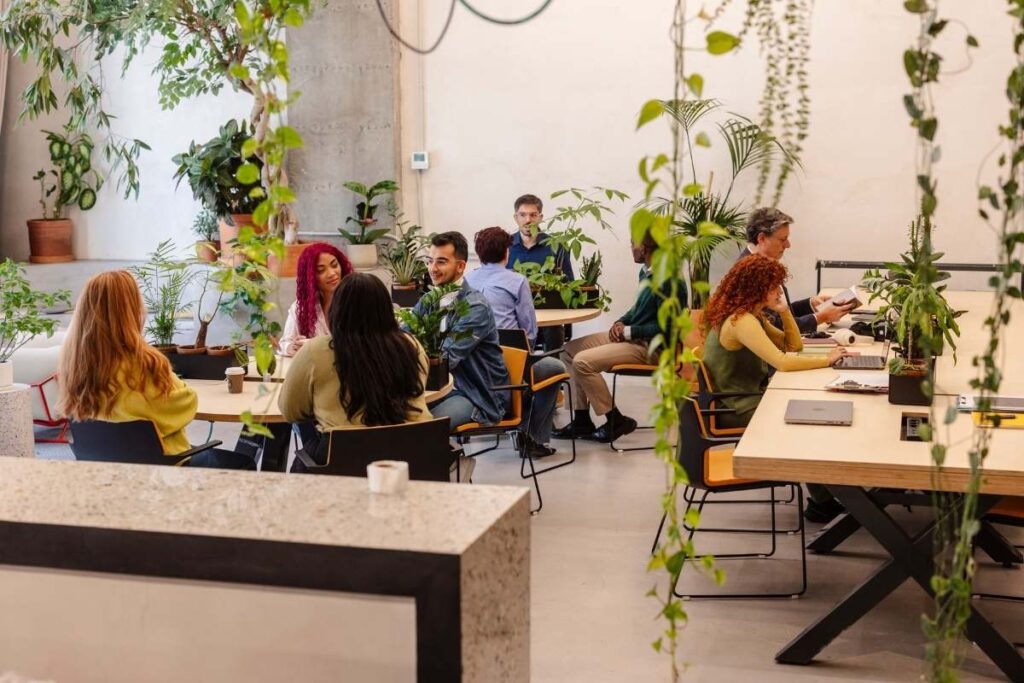
Biophilic design integrates natural elements into the built environment to reconnect occupants with nature. It is based on the understanding that humans have an innate need to be close to the natural world. Bringing the outdoors inside is not just about aesthetics; it is a functional design strategy that supports human physiological health.
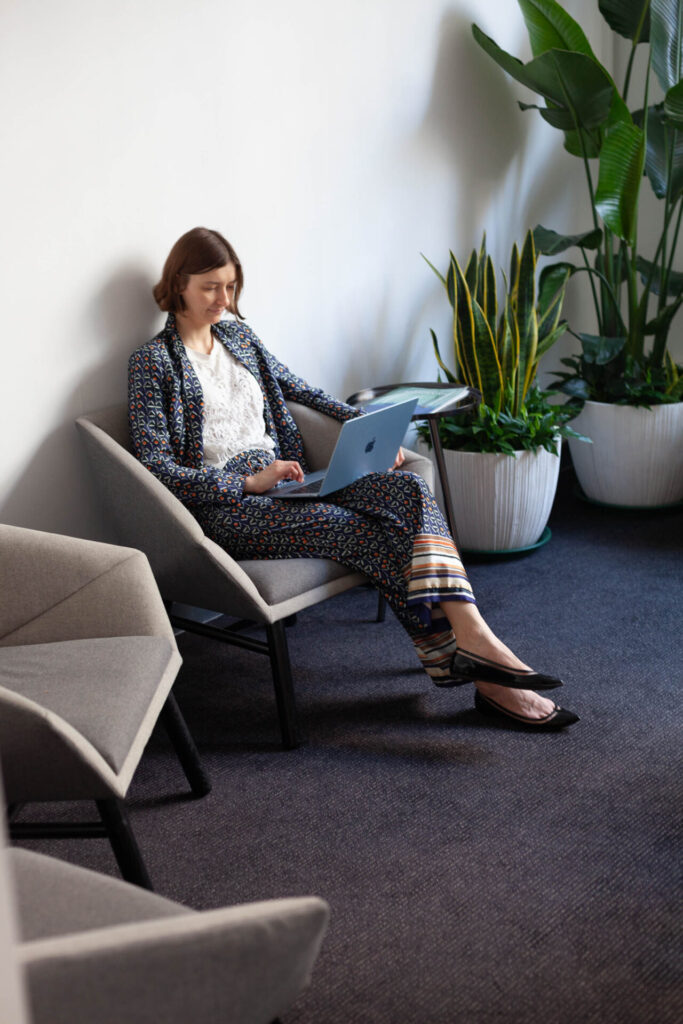
You can transform your workspace into a natural sanctuary by introducing these elements:
- Add desk plants: Provide low-maintenance plants like snake plants or pothos for every workstation.
- Maximise natural light: Arrange desks near windows and use glass partitions to let sunlight penetrate the office core.
- Use natural materials: Choose furniture made from long-lasting materials, bamboo, or cork rather than synthetic plastics.
7. Use technology to reduce travel
This involves leveraging high-quality communication tools to replace unnecessary business travel, particularly for short meetings. While face-to-face interaction is valuable, flying or driving for a one-hour catch-up is not necessary in today’s fast-paced work culture. Technology now offers a seamless alternative that saves time, money, and carbon.
To reduce your travel miles without giving up connections, you should upgrade your digital infrastructure:
- Prioritise video conferencing: Use Zoom or Teams for initial client introductions to avoid cross-city or international travel.
- Utilise high-quality AV: Invest in 4K cameras and clear audio systems so virtual meetings feel as personal as face-to-face ones.
- Adopt digital collaboration tools: Use virtual whiteboards like Miro to brainstorm effectively without needing to be in the same physical room.
This practice offers the single largest reduction in carbon footprint for most service businesses. It brings down the high emissions associated with flights and car travel, allowing your business to operate globally while keeping its environmental impact local.
Support your green goals at Gilmoora House
Gilmoora House has already done the hard work for you by building sustainability into our managed service. We understand that businesses want to be green without the administrative burden of managing utilities.
Why choosing Gilmoora House helps you stay sustainable:
- Use 100% renewable energy: We source our power from green providers. This ensures your daily operations have a minimal carbon impact, allowing you to report lower emissions to your stakeholders.
- Maintain energy efficiency: Our building is equipped with motion-sensor lighting and climate control. This prevents energy wastage in unoccupied zones, keeping the building’s footprint low automatically.
- Enjoy biophilic design: We have curated a workspace filled with lush plants and natural light. This improves air quality and mental well-being, creating a healthier environment for your team.
- Access sustainable transport: Our central location near Oxford Circus encourages staff to use public transport or walk, aiming to reduce commuting emissions.
- Utilise high-tech facilities: Our meeting rooms feature state-of-the-art video conferencing tools. This allows you to host seamless virtual meetings, reducing the need for business travel.
Ready to grow your business in a greener environment? Contact our Service Team at enquiries@gilmoorahouse.com or call 020 3008 6650 to book a tour of our Mortimer Street office.