Lighting is a crucial yet often overlooked element of the workplace environment. The quality of light around us can influence our mood and overall productivity. In this guide, we explore the science behind effective workplace lighting and share practical strategies to help your team stay focused, energised, and performing at their best throughout the workday.
What is a lighting workplace, and how does it actually affect your team?
A well-lit workplace is one in which illumination is intentionally designed to support the biological and professional needs of employees. It moves beyond simply providing enough light to see; it focuses on the quality, timing, and intensity of the lighting system to ensure visual comfort and health. By balancing brightness and managing colour temperature, businesses can create a space that feels natural rather than clinical.
The primary role of light in the office is to support the body’s biological clock, also known as the circadian rhythm. When lighting is poorly managed, such as through excessive glare or insufficient intensity, the brain struggles to maintain alertness, the eyes have to work harder to perceive visual information, all leading to cognitive fatigue from overwork.
The impact of quality lighting:
- Enhanced productivity: Well-designed lighting systems can significantly improve employee output by maintaining high energy levels throughout the afternoon, while also supporting mental wellbeing – spaces lacking natural or adequate light often lead to feelings of lethargy, low mood, or even diminished self-worth, exacerbating stress and reducing overall psychological resilience.
- Reduced health symptoms: Daylit environments reduce the frequency of eye strain and headaches by 84%, according to studies conducted by a professor from Cornell University.
- Improved sleep quality: Access to natural-spectrum light during the day helps regulate melatonin production, leading to better rest and improved focus the following morning.
How can you optimise your office lighting for health and performance?
In a practical sense, optimising workplace lighting is about improving both the quality and distribution of light across the office. Instead of relying on uniform overhead lighting, the goal is to create a balanced environment where natural daylight and well-designed artificial lighting support focus and comfort during long working hours. The strategies below outline how offices can make these improvements step by step.
1. Prioritise natural daylight
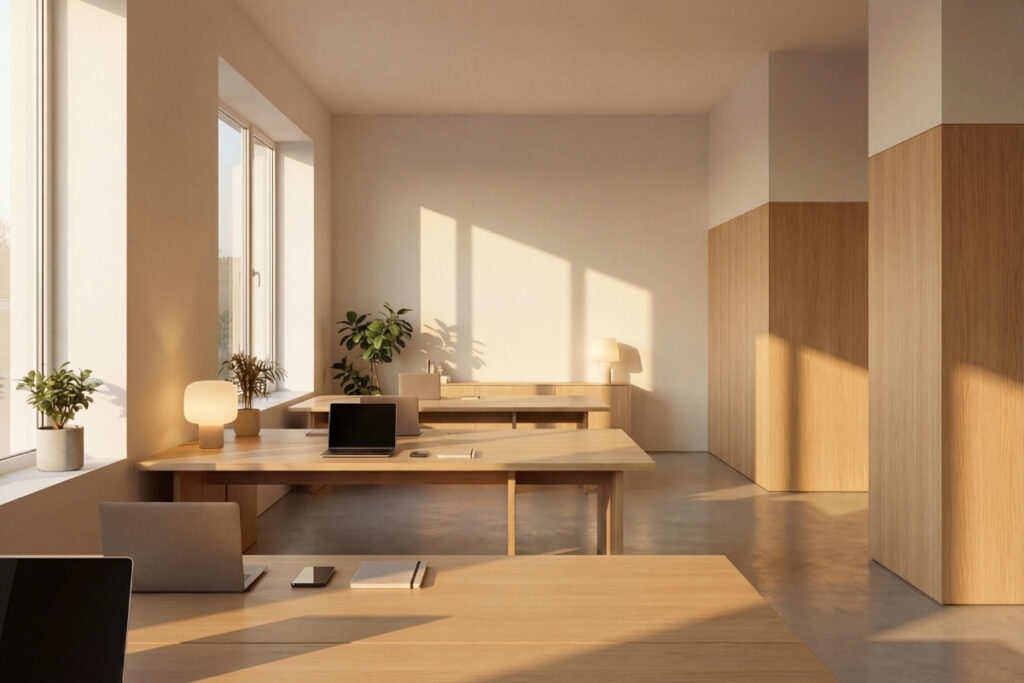
Natural light is the most effective tool for regulating the biological clock. It provides the full spectrum of light required for the brain to remain alert without the flickering often found in older artificial systems.
How to implement:
- Arrange workstations within 20 to 25 feet of windows to ensure every team member has a direct line of sight to the outdoors.
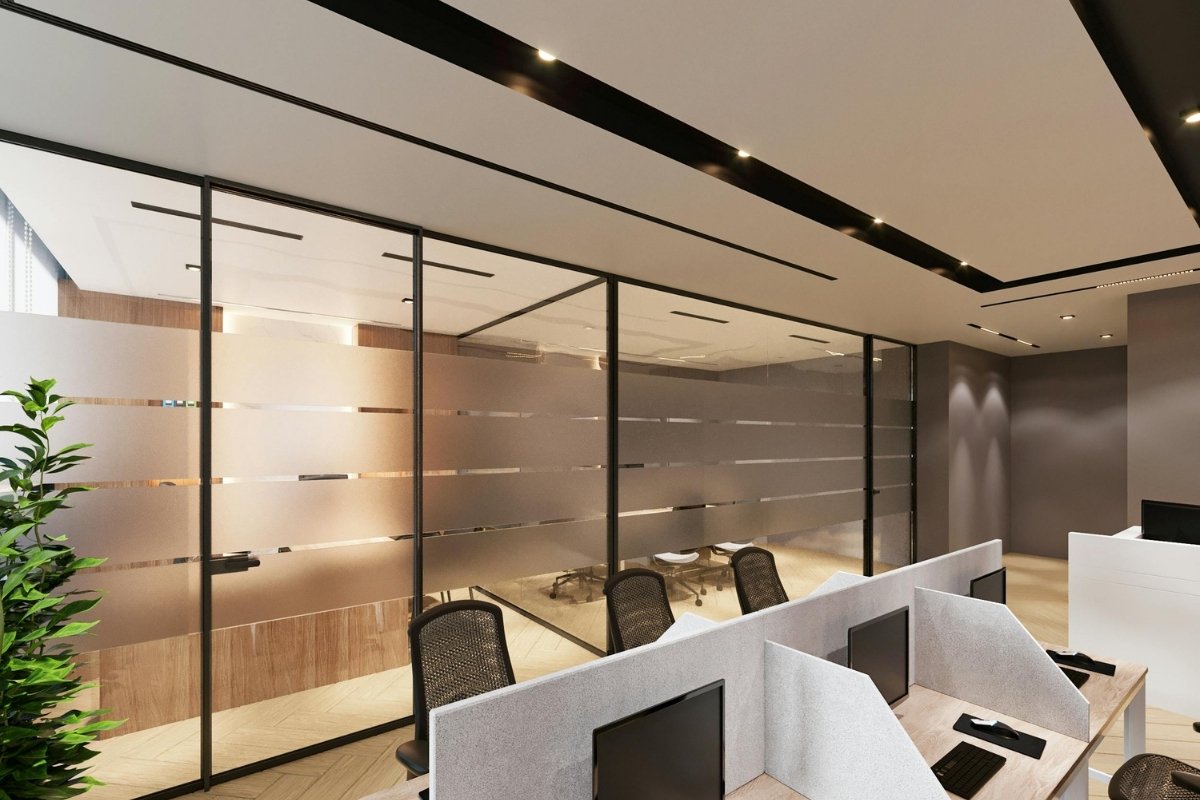
- Use glass partitions or open-plan shelving instead of solid walls to allow light to penetrate the core of the building.
- Keep window areas clear of tall furniture or storage units that might block incoming sunlight, and incorporate adjustable sunshade systems like curtains to prioritise daylight, especially during periods of intense sunlight.
2. Upgrade to smart LED systems for efficiency and comfort
Modern LED systems offer superior light quality while using significantly less energy. Unlike traditional fluorescent tubes, LEDs do not flicker, which is a common cause of silent migraines, headaches, and irritability in the workplace. When an efficient lighting system is equipped, it’ll help the employees to avoid such issues and maintain total focus on their work.
How to implement:
- Replace older T8 or T12 fluorescent fixtures with high-CRI (Colour Rendering Index) LED panels.
- Install dimmable drivers that allow the system to adjust brightness based on the time of day.
- Select “flicker-free” certified bulbs to protect employees with light sensitivity.
3. Individual adjustment with individual lighting controls
No two employees have the same visual requirements. Providing individual controls allows staff to tailor their environment to their specific task or biological preference.
How to implement:
- Provide adjustable desk lamps (task lighting) for work that requires high-intensity focus.
- Use smart apps that allow employees to dim the overhead lights directly above their specific zone.
- Offer “warm” or “cool” lamp options for personal workstations to suit different comfort levels.

4. Eliminate glare and reflections to protect the digital focus
Glare occurs when light reflects off computer screens or polished surfaces, forcing the eyes to work harder to process information. This is a leading cause of digital eye strain and physical fatigue.
How to implement:
- Position monitors at a 90-degree angle to windows to prevent direct sunlight from hitting the screen.
- Use matte-finish screen protectors or choose office furniture with non-reflective surfaces.
- Install “anti-glare” diffusers on overhead lights to soften the downward beam.
5. Adopt Human Centric Lighting (HCL) to support the biological clock
Human Centric Lighting mimics the natural progression of the sun. It provides bright, blue-enriched light in the morning to trigger alertness and transitions to warmer, more ambient tones in the evening to prepare the body for rest.
How to implement:
- Program your smart lighting system to shift from 5000K (cool white) in the morning to 2700K (warm white) after 4:00 PM.
- Gradually increase light intensity during the post-lunch “slump” to help the team overcome natural dips in energy.
- Ensure breakrooms use warmer, lower-intensity light to signal a mental shift away from high-focus work.
6. Calibrate workstation areas for high-intensity focus
Different tasks require different levels of brightness, measured in lux. For detailed professional work, a higher intensity is required to prevent errors and maintain cognitive speed.
How to implement:
- Aim for 500 lux on the primary working surface for standard computer-based tasks.
- Increase intensity to 750 or 1000 lux for detailed creative work or reviewing physical documents.
- Ensure the transition between a bright screen and a dark desk is minimised to prevent “contrast fatigue.”
7. Design collaborative spaces for warmth and flexibility
Meeting rooms and breakout zones should feel distinct from individual desks. Using warmer light temperatures (around 3000K) can help lower social barriers and encourage open communication.
How to implement:
- Use pendant lighting or soft floor lamps in collaborative corners to create a “living room” feel.
- Install separate switches for different light layers (ambient, task, and accent) to suit the mood of the meeting.
- Use “warm-to-dim” technology that gets warmer as it is dimmed, perfect for evening networking events.

8. Use motion and daylight sensors to lower overhead costs
Automation ensures that energy is never wasted on lighting unoccupied rooms. This supports your sustainability goals while keeping your workspace running efficiently.
How to implement:
- Install PIR (Passive Infrared) sensors in kitchens, bathrooms, and meeting rooms.
- Use “daylight harvesting” sensors that automatically dim the indoor lights when the sun provides enough natural illumination.
- Align your lighting strategy with sustainability certifications like Planet Mark by using 100% renewable energy sources.
Maximise productivity at Gilmoora House
Gilmoora House provides the perfect physical foundation for these focus-driven lighting trends. Our workspace on Mortimer Street is designed to ensure that environmental factors support rather than hinder your team’s performance.
Why our Mortimer Street office supports your focus:
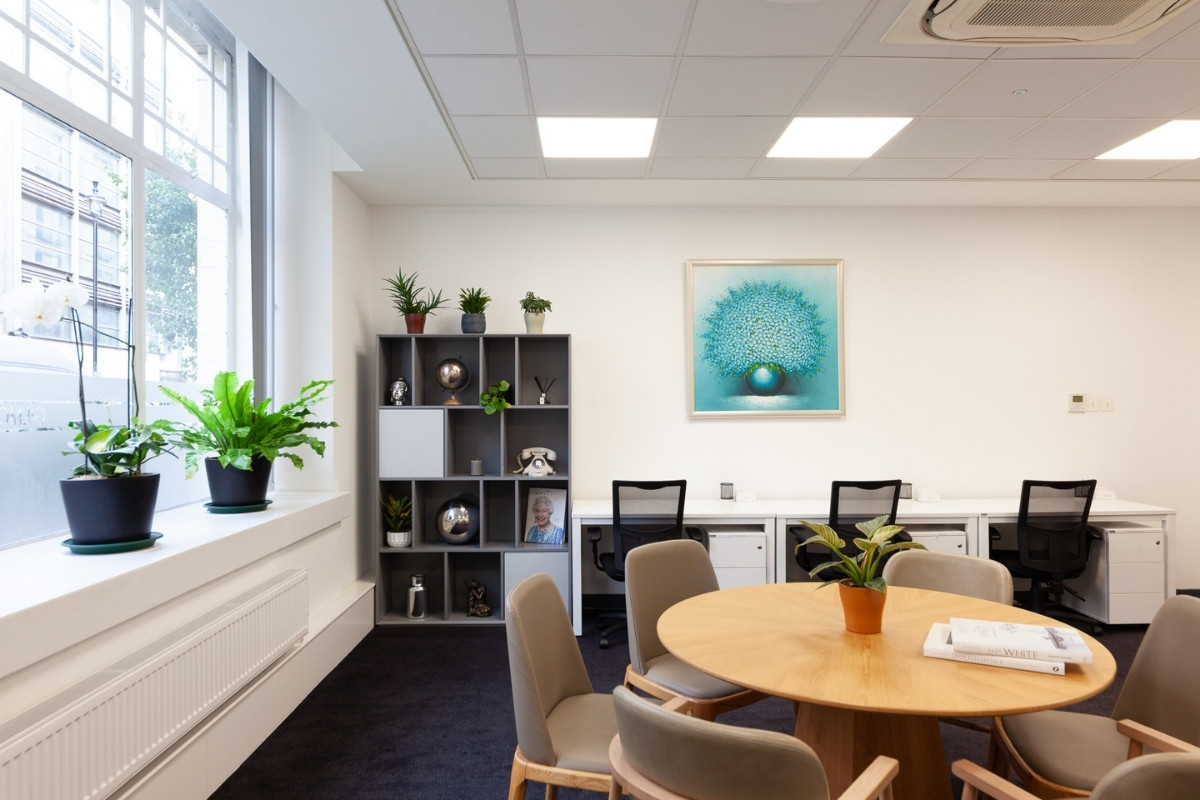
- Access windows in every office: Every private workspace at Gilmoora House features large windows and access to natural daylight. This ensures your team benefits from consistent circadian regulation, which reduces the frequency of afternoon energy slumps and improves overall mental health.
- Enjoy a green workspace: We integrate biophilic design and fresh plants throughout our common areas and corridors. Greenery works in tandem with quality lighting to lower heart rates and improve indoor air quality, creating a bright, restorative sanctuary in the middle of Central London.
- Stay sustainable easily: Our lighting and energy systems are designed with efficiency in mind. By basing your business here, you align with high environmental standards, allowing you to meet your corporate social responsibility goals while enjoying a premium, modern office.
Lighting is a subtle yet vital component of professional success. By being intentional with how you illuminate your workspace, you create an environment where your team can thrive both physically and mentally.
Ready to work in a bright, green sanctuary in Central London? Contact our Service Team at enquiries@gilmoorahouse.com or call 020 3008 6650 to book your tour today.